Speak with a licensed insurance agent

1-855-398-0716

TTY user 711 Mon-Fri : 8am-9pm EST

New to Medicare? - Basics of Medicare Parts A, B, C, and D

New to Medicare and feeling a bit lost? You’re not alone.

Medicare can seem confusing with its Parts A, B, C, and D. But don’t worry, we’re here to make it easy. This Medicare guide will help break down Medicare’s basics so you can understand what each part covers. Whether you’re deciding on coverage or helping a loved one, our clear explanations will support you in making sense of Medicare.

Dive in to learn the essentials and find the information you need to navigate your Medicare journey with confidence.

Key Highlights

  • Medicare aids those 65+, covering hospital (Part A) and medical insurance (Part B).
  • Medicare Advantage (Part C) bundles services, potentially adding dental and vision coverage.
  • Understanding plan services, costs, and networks helps tailor Medicare to fit your needs.
  • Prescription drug coverage (Part D) lowers medication costs, essential for managing healthcare.
  • Enter your ZIP code on our site to easily compare Medicare options available to you.
How Medicare works

Understanding the Basics of Medicare

Medicare can seem daunting at first, but understanding the basics can make it manageable.

Medicare is a federal health insurance program primarily for individuals aged 65 and older, and it also covers some younger people with disabilities.

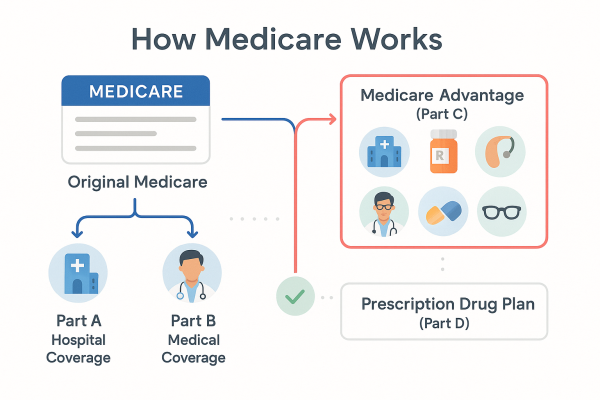
The program is structured into multiple parts, each designed to meet specific healthcare needs. These parts include Original Medicare, Medicare Advantage, and Medicare Part D, among others.

By getting to know each aspect, you’ll be better equipped to make informed decisions about your healthcare coverage and ensure it fits your unique needs.

Rich content results: Image

What is Medicare?

Medicare is a crucial part of the United States’ healthcare system, offering coverage to those aged 65 and older, as well as certain younger individuals who have disabilities or specific conditions. Fundamentally, Medicare is modeled after the idea of providing essential hospital and medical insurance to enhance health care access and manage costs for seniors.

One of the key aspects of this program is how it’s divided into distinct parts. These include Part A, which covers hospital insurance, and Part B, which provides medical insurance. Together, these are often referred to as Original Medicare.
Understanding the role of each part is vital for making informed decisions about coverage.

Original Medicare focuses on hospital stays, visits to doctors, and other outpatient services; however, costs can add up quickly with premiums, deductibles, and coinsurance. Since Medicare doesn’t cover everything, many people consider additional options like Medicare Advantage (Part C) and Part D drug coverage plans to fill in the gaps.

As you learn more about Medicare, it’s essential to consider your unique health needs and how each part can provide the coverage you require. This overview of Medicare’s basics ensures you’re starting with a solid foundation in your journey to finding the best coverage for your circumstances.

The Different Parts of Medicare Explained

Medicare is made up of several distinct parts, and knowing what each covers helps you tailor your coverage effectively. Original Medicare consists of Part A and Part B. Part A, or hospital insurance, primarily covers inpatient hospital stays, skilled nursing facilities, hospice care, and limited home health care services.

Generally, if you or your spouse paid Medicare taxes while working, you won’t have to pay a monthly premium for Part A.
Medicare Part B, on the other hand, focuses on medical insurance, including doctor visits, outpatient care, and preventive services like vaccinations and screenings. This part requires a monthly premium, and many use it side by side with Part A for comprehensive coverage.

Beyond Original Medicare, you have Medicare Part C, known as Medicare Advantage.

These plans are offered by private companies approved by Medicare and can include additional benefits like vision, dental, and hearing coverage, which Original Medicare doesn’t cover. Plus, most Medicare Advantage plans include Part D prescription drug coverage, simplifying the management of your healthcare needs.

Speaking of Part D, this aspect of Medicare is solely for prescription drug coverage.

Enrolling in a Part D plan helps cover medication costs, which can significantly reduce out-of-pocket expenses for ongoing prescriptions. Throughout your exploration of Medicare parts, keeping an eye on what coverage is included and how it matches your health requirements is crucial.

This understanding empowers you to choose a plan that not only fits your budget but also aligns with your lifestyle and care expectations. As always, considering all aspects of Medicare coverage will aid in making confident and well-informed decisions.

Original Medicare: Parts A and B

Original Medicare forms the foundation of the Medicare program and consists of Part A and Part B. Together, these parts provide hospital and medical insurance.

Understanding how each part works and what they cover is essential for managing your healthcare costs. Medicare Part A offers hospital insurance, covering inpatient care and some home health services. Meanwhile, Part B provides coverage for medical insurance, which includes doctor visits and preventive care.

Learning the benefits and limitations of Original Medicare can help you decide if additional coverage might be necessary for your personal healthcare needs.

What is Medicare Part A

How Hospital Insurance Works in Medicare Part A

Medicare Part A serves as your hospital insurance, offering coverage for several critical services. It primarily covers inpatient hospital stays, which include semi-private rooms, meals, and general nursing. You can also receive coverage for care in a skilled nursing facility, though this is not to be confused with long-term care.

Part A offers hospice care and limited home health care services for those who qualify.

Usually, if either you or your spouse paid Medicare taxes for at least 10 years in a row, you won’t face a monthly premium for Part A. This situation is commonly known as “premium-free Part A.” However, be aware of potential out-of-pocket costs, such as a deductible you’ll pay for each benefit period and possibly daily coinsurance for longer stays.

It’s important to note that Part A doesn’t cover everything related to hospital care, so understanding its limits is crucial.
When planning for unexpected hospital visits, having a good grasp of how these services are billed under Part A can make a significant difference. While Medicare Part A covers many essential hospital services, partnering it with other types of coverage can help address costs that might not be included, like extended stays or specialized care.

Considerations of how to match Part A coverage with your healthcare needs can make your Medicare planning more effective and less overwhelming.


Medicare Part A Hospital Insurance Insights

  • Explore additional coverage options to supplement Medicare Part A:
    • Consider enrolling in Medicare Part B for outpatient services and doctor visits, or a Medicare Advantage Plan (Part C), which often includes additional benefits.
    • Look into Medicare Supplement Insurance (Medigap) policies that cover costs not included in Part A or B, like copayments, coinsurance, and deductibles.
  • Delve into potential costs not covered by Part A:
    • Understand that Part A may not cover extended hospital stays beyond 90 days, private nursing care, or non-emergency transportation.
    • Acknowledge the importance of preparing for potential coverage gaps in skilled nursing facilities beyond the first 20 days.
  • Discuss the role of supplemental insurance in managing healthcare expenses:
    • Supplemental insurance can significantly reduce financial stress by covering deductibles and the costs of services not covered by Part A.
    • Explore options like employer-sponsored group insurance or Medicaid if eligible.
  • Highlight scenarios where pairing Part A with other plans is beneficial:
    • For individuals with chronic health conditions or frequent healthcare needs, pairing with a Medigap or Medicare Advantage Plan can provide comprehensive coverage.
    • Seniors traveling frequently outside the U.S. might benefit from plans offering international coverage.
  • Offer strategies to reduce out-of-pocket hospital expenses:
    • Stay within approved Medicare networks and use services during full benefit periods to avoid extra costs.
    • Negotiate payment plans with providers for any uncovered expenses or explore state assistance programs.
  • Identify resources for understanding Part A billing processes:
    • Access the official Medicare website and customer service for detailed billing information and support.
    • Utilize online tutorials and guides to break down the complex billing processes.
  • Explain the process of assessing personal healthcare needs for better coverage choices:
    • Conduct regular health assessments and review personal medical history to determine potential future healthcare needs.
    • Consult with a licensed Medicare advisor or counselor for personalized plan recommendations and financial planning guidance.
Medicare Part A and hospitalization

Medical Insurance Under Medicare Part B

Medicare Part B is your go-to for medical insurance, covering essential services beyond a hospital setting. It pays for doctors’ services, outpatient care, and various preventive services, including flu shots and cancer screenings.

While Medicare Part A focuses on hospital-related services, Part B ensures you have coverage for everyday health situations and preventive healthcare, helping you maintain a healthier lifestyle.

To utilize Medicare Part B, you’ll need to pay a monthly premium, which varies based on your income level.

Aside from premiums, be prepared for a yearly deductible and coinsurance, which is typically 20% of the Medicare-approved amount for services after the deductible is met. Part B doesn’t cover all medical expenses. For example, routine dental, vision, and hearing services aren’t included, so assessing what additional coverage might be necessary is important.

Using both Medicare Part A and Part B effectively can offer comprehensive health care coverage. You might decide to pair these options with Medicare Advantage Plans or other supplemental insurance to address gaps.

Understanding the scope of Part B helps you anticipate expenses and allocate your healthcare budget wisely, ensuring you’re prepared for the medical services you need while also considering how preventive measures can decrease future healthcare costs. By keeping informed about the facets of medical insurance under Part B, you empower yourself to make decisions that best suit your healthcare needs and lifestyle choices.

Medicare Part B enrollment

Navigating Medicare Advantage (Part C)

Medicare Advantage, also known as Part C, provides a comprehensive plan by bundling all the parts of Medicare.

These plans are offered by private health insurance companies approved by Medicare, allowing you to access additional benefits beyond Original Medicare. When considering Medicare Advantage, it’s essential to understand how these plans integrate services like vision, dental, and hearing coverage.

By exploring how Medicare Advantage plans work, you can ensure the coverage aligns with your needs, offering a well-rounded approach to healthcare.

How Does Medicare Advantage Work?

Medicare Advantage plans operate quite differently from Original Medicare, offering an alternative way to receive your Medicare benefits.

Understanding how Medicare Advantage works is key to deciding if it suits your healthcare needs.

With Medicare Advantage, private health insurance companies contract with Medicare to provide all your Part A and Part B benefits. Many plans also include Part D for prescription drug coverage, creating a more integrated and convenient healthcare package.

One of the standout features of Medicare Advantage is the additional benefits it can offer. Many plans provide services not covered by Original Medicare, such as dental, vision, and hearing care. This broad coverage can be especially beneficial if you need regular check-ups or treatments outside the standard hospital and medical care.

While the trade-off includes being limited to the plan’s network for healthcare providers, the comprehensive nature of coverage often appeals to those seeking simplicity in managing their healthcare.

When navigating Medicare Advantage, remember the importance of comparing plans.

Each Medicare Advantage plan can have different rules, costs, and coverage, so it’s vital to examine each aspect carefully. Evaluate factors such as premium, out-of-pocket expenses, and network restrictions to see how they fit with your healthcare needs and budget.

Since these plans can vary widely, fully understanding each option will help you make an informed decision that offers peace of mind and convenience in your healthcare journey.

Medicare advantage part c

Benefits of an Advantage Plan

The benefits of a Medicare Advantage plan go beyond standard coverage, making them an attractive choice for many seniors.

One of the most significant advantages is the inclusion of services that Original Medicare doesn’t cover. With a Medicare Advantage plan, you might receive dental, vision, and hearing benefits, which are valuable for maintaining overall health. Additionally, many plans bundle Part D prescription drug coverage, reducing the complexity of managing various plans for your healthcare needs.

Another notable benefit is the potential for lower overall costs. While you’ll still be responsible for your Part B premium, many Medicare Advantage plans offer low or even $0 premiums themselves, though this will vary by plan and location.

These plans often come with predictable co-payments and maximum out-of-pocket limits, providing financial security and easier budgeting. It’s essential, however, to consider the trade-offs, such as network restrictions that come with these plans.

Choosing a Medicare Advantage plan also means you have access to coordinated care. Many plans emphasize preventive care and wellness programs, aiming to keep you healthier in the long run. This holistic approach often involves coordinated services among doctors and specialists within the plan’s network, ensuring your care is comprehensive and well-managed.

Overall, understanding the benefits of an Advantage plan helps you determine if this type of coverage aligns with your lifestyle and healthcare preferences, providing a more personalized approach to managing your health.

To explore Medicare options that suit your needs, enter your ZIP code on our site to compare plans seamlessly. In the future, you’ll also have the opportunity to call for personalized help when our phone number becomes available, ensuring you have the support you need to make an informed decision.

Prescription Drug Coverage

Prescription drug coverage through Medicare is a vital component for many seniors managing daily healthcare needs.

This coverage primarily comes from Medicare Part D or through certain Medicare Advantage plans that include drug benefits. Part D plans are provided by private insurers and are designed to help cover the costs of prescription medications you need.

They vary significantly in terms of premiums, co-pays, and the drugs they cover, making it essential to compare options. Understanding these plans can significantly reduce out-of-pocket expenses and ensure you get the necessary medications without financial stress.

What is Medicare Part D

Choosing the Right Drug Plan With Medicare

Selecting the right Medicare drug plan involves evaluating several key factors to ensure your needs are met effectively.

With numerous Part D plans available, it’s crucial to examine each plan’s coverage, costs, and network of pharmacies. Start by listing all the medications you take regularly. From there, compare how various plans cover these drugs, as formularies, the list of covered drugs, can differ widely. Additionally, consider the plan’s tiered pricing system, which affects the cost of medications.

Different tiers correspond to different co-payment levels, and understanding this can help you predict your costs more accurately.

Next, think about the pharmacies in the plan’s network. Some plans offer better prices if you use preferred pharmacies or mail-order services.

This step is vital to avoid unexpected costs. Furthermore, examine the plan’s cost structure, which includes premiums, deductibles, and any co-pays or coinsurance. Balancing your budget with the need for comprehensive drug coverage is a primary consideration. Don’t overlook the importance of checking the plan’s policies concerning generic drug substitutions, as this can impact both availability and costs.

Lastly, assess any coverage gaps. For example, the Medicare “donut hole” is a phase where drug costs are higher before catastrophic coverage begins. Some plans offer additional coverage during this period, so exploring plans that minimize out-of-pocket expenses during these gaps can be advantageous.

Keeping these elements in mind helps in navigating your Medicare journey and allows you to choose a plan that secures your healthcare needs without undue financial burdens.

To explore Medicare options that suit your needs, enter your ZIP code on our site to compare plans seamlessly. In the future, you’ll also have the opportunity to call for personalized help when our phone number becomes available, ensuring you have the support you need to make an informed decision.


Plan Component Considerations Impact on Costs
Premiums Monthly fees can vary between plans. Higher premiums may offer lower out-of-pocket expenses.
Formulary Check if specific prescriptions are covered. Coverage of medications affects out-of-pocket costs for specific drugs.
Pharmacy Network Determine if preferred pharmacies are included. Using in-network pharmacies may reduce costs.
Coverage Gap Understand when the coverage gap may take effect. Costs may increase temporarily during the gap period.
Annual Deductible Consider the deductible amount before coverage begins. Higher deductibles may lower monthly premiums but increase upfront costs.

This table provides a succinct overview of factors to consider when selecting a Medicare drug plan, highlighting how different elements can affect overall costs and coverage.

Final Steps to Compare Your Options

After understanding the basics of Medicare, you’re ready to dive into comparing your options.

This process can seem overwhelming, given the variety of Medicare plans available, from Original Medicare to Medicare Supplement and Advantage plans. The key is to explore the services and coverage each plan offers, ensuring they align with your healthcare and financial needs.

Understanding how to make informed decisions about which plan fits your lifestyle will ultimately lead to a more personalized and efficient healthcare strategy. Let’s explore pivotal ways to navigate your choices confidently and effectively.

Learn How to Explore Plans and Make Informed Decisions

Taking the leap to explore Medicare plans doesn’t have to be stressful. The first step is understanding what each plan offers in terms of coverage, services, and costs. Original Medicare might seem straightforward with its Parts A and B, but you’ll need to decide if adding a Medicare Supplement, also known as Medigap, enhances your coverage.

These policies help cover costs that Original Medicare doesn’t, like deductibles and coinsurance.

Evaluating Medicare Advantage plans is another key step. These plans often include extra benefits like vision, dental, and hearing services. They may also pack in drug coverage, making them a complete package for those wanting consolidated care.

To start your exploration, make a list of your current healthcare needs, including any required services or medications.

This list will help you match your needs with a plan that offers the right coverage. Consider the network of providers covered by each plan, especially if you want to keep your current doctors. Seeking a plan with a wide network might increase your care options. As you compare options, look closely at costs such as premiums, deductibles, and co-payments, as these will affect your budget.

Each plan’s policy may vary, so be sure to read the fine print on services covered.

Don’t forget about Part D for drug coverage. Many Advantage plans include this, but stand-alone Part D plans also exist if Original Medicare is your primary choice. List the medications you take and check if they’re covered under each plan’s formulary.

Ensuring your drugs are covered reduces out-of-pocket expenses. Engaging with educational resources like MedicarePlansGuide.org can further assist your understanding.

There, you can learn more about each plan in detail.

Finally, remember that your needs might change over time, so stay flexible. Annual enrollment periods are a chance to reassess and switch plans if necessary. Learning how to explore and compare Medicare options sets a solid foundation for making informed decisions, helping you manage your healthcare with confidence.

Enter your ZIP code on our website to compare Medicare options, and feel free to seek personalized help as soon as our phone support becomes available.

Understanding Medicare can seem complex, but you don’t have to navigate it alone. Our goal is to help seniors and caregivers feel informed and confident. By exploring Medicare Parts A, B, C, and D, you gain valuable insights into which options may fit your needs.

We invite you to enter your ZIP code on our site to compare Medicare options in your area. For more personalized assistance, you can call us once our phone number is available. We’re here to provide the support you need on your Medicare journey.


Compare Medicare plans and enroll online

Final Steps to Compare Your Options

What is Medicare and who is eligible to enroll?

Medicare is a federal health insurance program for individuals aged 65 and older, as well as some younger people with disabilities. It’s divided into different parts, each covering specific healthcare services.

What are the different parts of Medicare?

Medicare consists of four main parts: Part A (hospital insurance), Part B (medical insurance), Part C (Medicare Advantage), and Part D (prescription drug coverage). Each part serves different healthcare needs.

How does Medicare Advantage (Part C) differ from Original Medicare?

Medicare Advantage plans, offered by private companies, bundle Part A and Part B and often include additional benefits like dental, vision, and hearing coverage. They usually include Part D drug coverage as well.

Why might someone need Medicare Part D?

Medicare Part D provides prescription drug coverage. It helps lower the cost of medications, which is especially important for those managing chronic conditions that require regular prescriptions.

How can I compare Medicare options available in my area?

You can compare Medicare plans by entering your ZIP code on our website, MedicarePlansGuide.org. This tool helps you assess the various coverage options that best fit your healthcare and budget needs.

Have Questions?

Speak with a licensed insurance agent

1-855-398-0716

TTY users 711

Mon-Fri: 8am-9pm ET

Find & Compare Plans Online

Speak with a licensed insurance agent

1-855-398-0716TTY 711

Mon-Fri: 8am-9pm ET

ZRN Health & Financial Services, LLC, a Texas limited liability company