➤ What is Medicare Part D?
Medicare Part D is Medicare’s prescription drug benefit. It is offered by private insurers either as standalone drug plans, which pair with Original Medicare and Medigap, or as part of Medicare Advantage plans. Each plan has its own drug list, pharmacy network and costs, so compare plans by your specific prescriptions.
➤ How much does Part D cost in 2027?
The average standalone Part D premium for 2027 is about $36 a month, and low-premium options are widely available. The maximum deductible is $700, up from $615, and the out-of-pocket cap is $2,400, up from $2,100. Your actual costs depend on your drugs, pharmacy and plan.
➤ Is Part D mandatory?
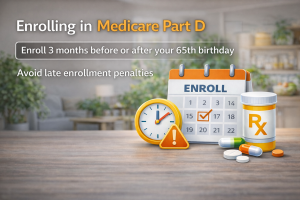
No, but if you go without Part D or other creditable coverage when you are first eligible, you may pay a late penalty for as long as you have Part D.
➤ What is creditable drug coverage?
Creditable drug coverage is coverage expected to pay, on average, at least as much as standard Medicare Part D. Employer and union plans tell you each year whether yours is creditable. If you keep creditable coverage, you can delay Part D without a late enrollment penalty, so save those notices.
➤ Does Part D cover insulin?
Yes, covered insulin costs no more than $35 for a month’s supply under Medicare Part D plans. Check that your specific insulin is on the plan’s drug list, and compare plans by your full list of prescriptions, since other drugs still count toward the $700 deductible and $2,400 out-of-pocket cap for 2027.
➤ Can I get help paying for Part D?
Yes, Extra Help lowers Part D premiums, deductibles and copays for people with limited income and resources. You can apply through Social Security, and some people qualify automatically, such as those with Medicaid. Your State Health Insurance Assistance Program (SHIP) can also help you check whether you qualify.
➤ When can I change Part D plans?
You can change Part D plans during Annual Enrollment, October 15 to December 7, with coverage starting January 1. For 2027 that window runs October 15 to December 7, 2026. Outside that period, you generally need a Special Enrollment Period, such as after a move or a change in other coverage.