Speak with a licensed insurance agent

1-855-398-0716

TTY user 711 Mon-Fri : 8am-9pm EST

What Is Medicare Advantage?

Medicare Advantage, also called Medicare Part C, is a type of Medicare coverage offered by private insurance companies that contract with Medicare.

Instead of getting hospital and medical benefits directly from the federal program, you receive them through a Medicare Advantage plan, often with extra benefits such as prescription drug, dental, vision, and hearing coverage.

For many seniors, Medicare Advantage plans provide a convenient way to manage healthcare needs and costs in one place. What is Medicare Advantage?

Understanding how these plans work, how they differ from Original Medicare, and how to compare options in your area can help you feel confident about your coverage choices.
Understanding Medicare Advantage and Home Health Care

How Original Medicare Works

Original Medicare is the starting point for most people who are new to Medicare. It includes:

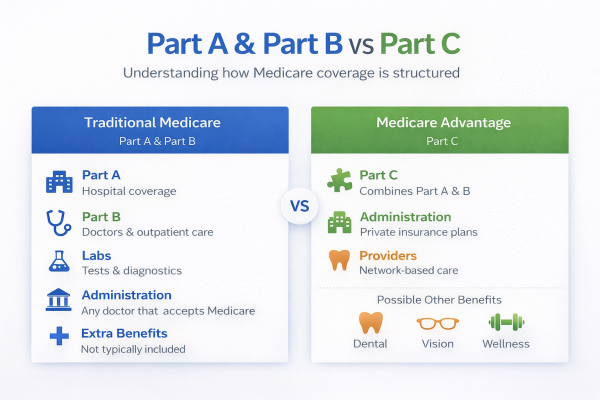
  • Medicare Part A provides inpatient hospital care, skilled nursing, and limited home health services.
  • Medicare Part B for doctor visits, outpatient care, lab work, preventive services, and some medical equipment.

With Original Medicare, you can visit any provider in the United States who accepts Medicare, and there are no network restrictions.

This level of flexibility appeals to many seniors who travel frequently or maintain relationships with doctors in different states.

However, Original Medicare has several gaps that can affect both coverage and costs. It does not include routine prescription drug coverage, and it typically does not cover dental, vision, or hearing services.

In addition, there is no limit on yearly out-of-pocket spending, which can lead to unpredictable medical costs for those who need frequent care.

Because of these limitations, many people purchase a separate Part D prescription drug plan and add a Medicare Supplement (Medigap) policy to help with deductibles and coinsurance.

Managing these multiple policies can feel overwhelming, which is why many retirees consider Medicare Advantage as a more streamlined alternative.

Compare plans and enroll online

How Medicare Advantage Works

Medicare Advantage plans are an alternative way to receive your Medicare benefits.

When you join a Medicare Advantage plan, you continue to pay your Part B premium, but a private insurance company approved by Medicare provides your Part A and Part B coverage.

These plans must cover everything that Original Medicare covers, but they are allowed to structure benefits differently and may include extra services. Many Medicare Advantage plans:

  • Include built-in Part D prescription drug coverage
  • Offer dental, vision, and hearing benefits
  • Add wellness programs, telehealth visits, or transportation benefits

Plans usually operate as HMOs or PPOs. HMO plans generally require you to use a network of doctors and hospitals and may ask for referrals to see specialists.

PPO plans offer more flexibility to see providers out of network, although you may pay higher costs when you do.

Every Medicare Advantage plan sets its own premiums, copays, and rules, within Medicare guidelines. Choosing a plan means looking at how those rules line up with your health needs and budget.

Understanding Medicare Advantage Plans vs Original Medicare

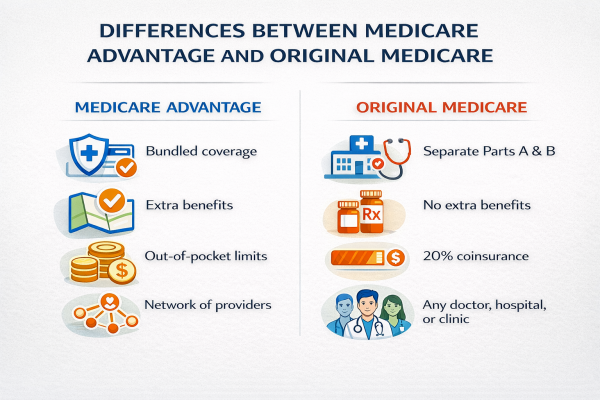
When you compare Medicare Advantage plans with Original Medicare, several differences stand out in terms of coverage, provider access, and costs.

Coverage Differences

Original Medicare includes hospital and medical coverage only. You need separate plans for drugs and for help with deductibles and coinsurance. Medicare Advantage plans deliver the same Part A and Part B benefits and often include:

  • Part D prescription coverage
  • Routine dental, vision, and hearing services
  • Fitness or wellness benefits

This all-in-one approach is appealing to seniors who prefer to carry a single Medicare card.

Medicare Part A vs Part B vs Part C

Provider Access

Original Medicare lets you visit any provider who accepts Medicare anywhere in the country. Medicare Advantage plans use provider networks.

With an HMO, care outside the network is generally not covered except for emergencies and urgent care. PPO plans allow out-of-network visits at a higher cost.

For some people, the trade-off between network rules and extra benefits is acceptable; others prefer the broader freedom of Original Medicare.

Costs and Financial Protection

Original Medicare has standardized premiums and cost-sharing but no annual limit on what you might spend for covered services. Medicare Advantage plans must include an annual out-of-pocket maximum.

After you hit that limit for covered Part A and Part B services, the plan pays 100 percent for covered care for the rest of the year.

For seniors on a fixed income, this built-in limit can make budgeting easier, although you still need to compare premiums, copays, and drug costs carefully.

Find & Compare Plans Online

Speak with a licensed insurance agent

1-855-398-0716TTY 711

Mon-Fri: 8am-9pm ET

Benefits of Medicare Advantage for Seniors

Medicare Advantage plans have grown in popularity because they package a broad set of benefits in a single plan. Many seniors appreciate that they can:

  • Combine hospital, medical, and drug coverage under one policy
  • Use a plan that includes extras such as dental cleanings, eyewear allowances, and hearing aids
  • Access wellness resources like nurse hotlines, telehealth visits, and fitness programs

The extra benefits are not just nice add-ons. Routine dental and vision care can help prevent larger medical issues.

Built-in drug coverage simplifies life for people who take multiple medications, especially when plans offer mail-order pharmacy services or lower copays for preferred generics.

Another important advantage is care coordination. Many Medicare Advantage plans encourage a primary care relationship and use care managers to help seniors with chronic conditions such as diabetes, heart disease, or COPD.

Having a team watch over prescriptions, test results, and follow-up appointments can help reduce hospital stays and improve day-to-day quality of life.

For seniors who prefer a more organized approach to healthcare, Medicare Advantage can feel more like a single, integrated system rather than separate parts they have to manage on their own.

Navigating Your Health Care Options

Out-of-Pocket Costs in Medicare Advantage

When you evaluate a Medicare Advantage plan, your decision should not be based on the monthly premium alone. Out-of-pocket costs include:

  • Monthly plan premium (in addition to your Part B premium)
  • Annual deductible, if any
  • Copays or coinsurance for doctor visits, hospital stays, and other services
  • Prescription copays for each drug tier
  • Costs for services received outside the network, if the plan allows them

Some plans advertise a $0 premium, but they may have higher copays or a more limited provider network. Other plans may charge a modest premium but provide lower costs when you use services.

The annual out-of-pocket maximum is an important number, since it represents the most you will pay for Part A and Part B covered care in a year, not counting premiums or drugs.

If you see specialists often, need frequent lab work, or have conditions that could require a hospital stay, it is worth running the numbers for a typical year under each plan you are considering.

A licensed Medicare insurance specialist can help you estimate these costs, including what you might pay if your health needs increase in the future.

Managing Out-of-Pocket Costs

Pros and Cons of Medicare Advantage for Seniors

Like any insurance option, Medicare Advantage has strong points and trade-offs that matter when you make a decision.

Many seniors appreciate the single-plan simplicity, extra benefits, and the protection of an annual out-of-pocket maximum. Integrated Part D coverage means fewer separate bills and less confusion.

Plans that focus on care coordination can make it easier to manage chronic health conditions and stay on top of preventive care.

Because Medicare Advantage plans use networks, your favorite doctor or hospital might not participate in every plan.

Traveling for long periods can be trickier under an HMO, since non-emergency care is usually expected to stay within the service area.

Drug formularies can change each year, so the plan that fits your prescriptions now might not be the best fit later.

Some seniors are comfortable with networks and appreciate the trade-off for extra benefits.

Others prefer the flexibility of pairing Original Medicare with a Medigap policy and a standalone drug plan. The right answer depends on your priorities, health profile, and budget.

How Medicare Advantage Enrollment Works

If you are ready to review Medicare Advantage plans, request a free, no-obligation comparison or schedule a call with a Medicare Plans Guide expert.

A short conversation can give you clarity on how Medicare Advantage works for your situation and help you move forward with coverage that supports a confident, comfortable retirement.

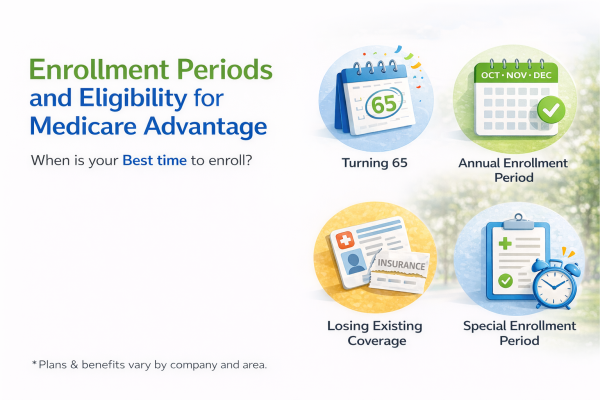
The main opportunities to join or switch to a Medicare Advantage plan include:

  • Initial Enrollment Period (IEP): When you first qualify for Medicare, usually around your 65th birthday.
  • Annual Enrollment Period (AEP): From October 15 to December 7 each year, you can switch from Original Medicare to Medicare Advantage, change Medicare Advantage plans, or go back to Original Medicare.
  • Medicare Advantage Open Enrollment Period: From January 1 to March 31, people already in a Medicare Advantage plan can change to another Medicare Advantage plan or return to Original Medicare.
  • Special Enrollment Periods (SEPs): Available when certain life events occur, such as moving out of your plan’s service area or losing other credible coverage.

Understanding these windows helps you avoid missing chances to adjust your coverage when your health or circumstances change.

Compare plans and enroll online

Medicare Advantage Enrollment Tips

A little preparation can make choosing a Medicare Advantage plan much easier. Here are practical steps to follow:

  1. List your medications. Write down each prescription, the dosage, and how often you take it. This list will help you evaluate plan formularies and pharmacy networks.
  2. Gather your doctors and clinics. Note which providers you want to keep. Check whether they are in the network of any Medicare Advantage plan you are considering.
  3. Think about your travel and lifestyle. If you spend long periods in another state or travel frequently, a plan with broader network rules, such as a PPO, might suit you better than a strict HMO.
  4. Review the Summary of Benefits. Look closely at co-pays for primary care, specialists, hospital stays, and urgent care. Do the same for dental, vision, and hearing services if those are important to you.
  5. Check star ratings. Medicare publishes star ratings that measure member satisfaction, customer service, safety, and plan performance. Higher ratings can point toward more reliable plans.

Many seniors find it helpful to talk with an independent, licensed Medicare broker who can compare multiple Medicare Advantage plans side by side. A broker can explain how each plan treats your particular prescriptions and doctors and can help you avoid surprises after you enroll.

Enrollment periods for Medicare advantage plans

How to Decide Whether Medicare Advantage Is Right for You

Choosing between Medicare Advantage and Original Medicare with supplements is a personal decision.

If you value extra benefits, predictable spending limits, and a single plan that handles most of your coverage, a Medicare Advantage plan may suit you.

If broad provider choice and nationwide flexibility are most important, Original Medicare with a Medigap policy and Part D plan might be better.

You do not have to figure this out alone. The team at MedicarePlansGuide.org works with Medicare beneficiaries across the country and follows changes in Medicare Advantage plans, networks, and rules each year.

Using your list of medications, doctors, and hospitals, a licensed specialist can compare options in your area, estimate yearly costs, and help you choose coverage that fits both your health needs and your budget.

If you are ready to review Medicare Advantage plans, request a free, no-obligation comparison or schedule a call with a Medicare Plans Guide expert.

A short conversation can give you clarity on how Medicare Advantage works for your situation and help you move forward with coverage that supports a confident, comfortable retirement.

Have Questions?

Speak with a licensed insurance agent

1-855-398-0716

TTY users 711

Mon-Fri: 8am-9pm ET

Find & Compare Plans Online

Speak with a licensed insurance agent

1-855-398-0716TTY 711

Mon-Fri: 8am-9pm ET

ZRN Health & Financial Services, LLC, a Texas limited liability company