Speak with a licensed insurance agent

1-855-398-0716

TTY user 711 Mon-Fri : 8am-9pm EST

Dental And Vision Insurance For Seniors

Choosing the right dental and vision insurance for seniors can play an important role in maintaining comfort, independence, and confidence as you age.

Many people are surprised to learn that Original Medicare typically does not pay for routine dental care or routine vision services, leaving common needs like cleanings, fillings, eye exams, glasses, and contacts uncovered.

As a result, seniors often look to specialized dental and vision plans to help manage these costs and stay consistent with care.

Dental and vision coverage is not one-size-fits-all. Options vary based on location, provider networks, and how coverage works alongside Medicare.

Understanding how these plans are structured makes it easier to compare benefits, avoid unexpected expenses, and choose coverage that fits both health needs and budget.

By exploring dental and vision plans designed for seniors, you can identify coverage that supports everyday needs while offering greater cost predictability.

The right plan can help protect your oral and eye health while giving you peace of mind as your coverage works alongside Medicare.
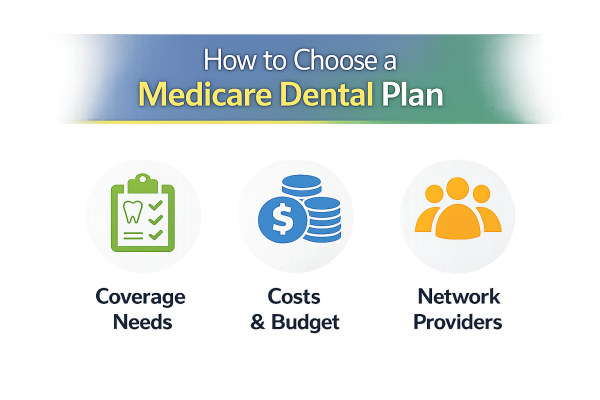

how to choose a Medicare dental plan that's right for you

Why Dental and Vision Coverage Matters after 60

As people move into their 60s and beyond, dental and vision needs tend to increase while insurance support often decreases.

Routine oral care and eye exams are closely tied to comfort, mobility, nutrition, and independence, yet many seniors discover these services are not handled by Original Medicare.

Without coverage, even basic appointments can become expensive, leading some individuals to delay care until problems become harder and more costly to address.

Dental health affects everyday activities like eating and speaking, while untreated issues may also influence broader health concerns.

Vision care plays an equally important role, supporting safe driving, reading, balance, and awareness of changing health conditions such as glaucoma or macular degeneration.

When routine exams are skipped, early warning signs may be missed.

For many seniors, predictable costs matter just as much as access. Dental and vision insurance can help reduce uncertainty by spreading expenses across monthly premiums rather than unexpected bills.

Coverage may also make it easier to stay consistent with preventive visits, which often cost far less than restorative treatment later.

Another reason coverage becomes important is provider access. Many plans include established dentist and eye doctor networks, which help control pricing and simplify scheduling.

This can be especially helpful for retirees living on fixed incomes who want fewer financial surprises.

The goal is not perfection, but consistency. Regular cleanings, exams, and eyewear updates support comfort and confidence while helping avoid sudden, high out-of-pocket expenses.

Dental and vision insurance gives seniors a way to manage care on their own terms, even when Medicare alone does not fill the gap.

Compare plans and enroll online

What Medicare Covers for Dental and Vision

Understanding how Medicare handles dental and vision services helps clarify where additional coverage may be useful. Original Medicare, which includes Part A and Part B, generally does not pay for routine dental care or routine eye exams.

Services such as cleanings, fillings, dentures, glasses, and contact lenses are usually excluded. Limited coverage may apply only when dental or vision care is directly connected to a covered medical procedure, which is uncommon for everyday needs.

This gap often surprises new Medicare beneficiaries. Many people assume dental and vision support works the same way it did under employer plans, only to find those benefits are no longer included.

As a result, seniors who rely solely on Original Medicare may pay entirely out of pocket for preventive care, which can discourage regular visits.

Medicare Advantage plans, also called Part C, work differently. These plans are offered by private insurers and may include dental and vision benefits as part of the package.

Coverage details vary by plan and location, with some offering preventive services only and others including broader benefits such as crowns, dentures, or eyewear allowances.

It is important to review each plan carefully. Dental and vision benefits under Medicare Advantage are not standardized, and coverage limits, provider networks, and cost sharing can change by county.

A plan that looks strong in one area may offer limited value in another.

For those who prefer Original Medicare, separate dental and vision policies remain an option. These plans are designed specifically to fill Medicare gaps and can be paired with a Medigap policy if desired.

Choosing the right path depends on how much flexibility, coverage depth, and provider choice matter to you.

Understanding the Importance of Dental Care for Seniors

Main Coverage Options for Seniors

Seniors typically choose dental and vision coverage through one of three approaches, each with different trade-offs. Some prefer separate dental and vision policies, while others choose bundled coverage or rely on Medicare Advantage benefits.

The best option often depends on provider preferences, budget, and expected care needs.

Stand-alone dental and vision plans offer flexibility. Each policy can be selected independently, allowing you to focus on coverage that matches your personal situation.

This approach can work well for those who already have trusted dentists or eye doctors and want to check network compatibility before enrolling.

Separate plans may also offer stronger benefits in one area, such as higher dental annual maximums or more generous vision allowances.

Bundled dental and vision plans combine both benefits under one policy. These plans are popular with seniors who want simpler administration and one monthly premium.

Some bundles also include hearing benefits, which may appeal to those seeking broader support. While bundling can be convenient, coverage limits may be lower than what separate policies provide, making it important to review benefit caps closely.

Medicare Advantage plans represent another route. Many include dental and vision benefits along with medical coverage. This option can be appealing for individuals who like having all services managed under one plan.

However, provider networks are often more restrictive, and benefits vary widely by plan and location.

Each approach has strengths. Separate plans offer control, bundled plans offer simplicity, and Medicare Advantage offers consolidation. The right choice balances access, affordability, and predictability while fitting comfortably with your overall Medicare setup.

How Location Affects Dental and Vision Coverage

Where you live plays a significant role in determining dental and vision plan availability. Insurance carriers design benefits based on state regulations, regional costs, and provider participation.

As a result, two people with the same coverage type may see very different options depending on their ZIP code.

Provider networks are one of the biggest variables. Some areas have extensive dentist and eye doctor participation, while others may be more limited. Before enrolling in any plan, it is wise to confirm that nearby providers accept the coverage.

This step helps avoid unexpected out-of-network costs or long travel distances for appointments.

Pricing also changes by location. Premiums, copays, and coverage limits may reflect local service costs. Urban areas may offer more plan choices, while rural regions may have fewer options but broader networks.

These differences can influence whether a bundled plan or separate policies offer better value.

Moving during retirement can also affect coverage. A plan that worked well in one state may not transfer easily to another.

When relocating, reviewing dental and vision coverage should be part of the transition process, along with Medicare plan reassessment.

State-specific availability is another reason personalized guidance matters. Online plan descriptions often show general benefits, but exact details may differ locally.

Reviewing plan documents and network lists ensures that expectations match reality.

By accounting for location early in the decision process, seniors can narrow choices quickly and focus on plans that truly fit their area. This approach saves time and reduces the chance of enrollment surprises later.

Understanding Medicare Parts: A Quick Overview

What Dental Coverage Typically Includes

Dental insurance for seniors is usually structured around different service categories, each with its own cost sharing rules. Preventive care often receives the highest level of support, encouraging routine visits that help manage long-term costs.

Exams, cleanings, and basic X-rays are commonly included, sometimes with no deductible.

Basic services generally follow, covering procedures such as fillings and simple extractions. These services often involve coinsurance, meaning the plan pays a percentage of the cost after any deductible is met.

Coverage levels vary, making it important to review how much the plan contributes.

Major services involve higher-cost treatments such as crowns, bridges, dentures, or root canals. This is where plans differ most. Annual maximums, waiting periods, and coverage percentages all influence how much financial support you actually receive.

Some policies place separate limits on dentures or exclude implants entirely.

Understanding waiting periods is especially important. Many dental plans require members to wait several months before major services are covered.

If dental work is expected soon, plans with shorter waiting periods may offer better value even if premiums are higher.

Dental networks also matter. Staying in-network usually results in lower costs and clearer pricing. Confirming your dentist’s participation before enrolling helps avoid frustration later.

Dental coverage works best when matched to your expected needs. Preventive-focused plans suit routine care, while more robust policies help manage larger procedures over time.

What Vision Plans Commonly Offer for Seniors

Vision insurance is typically more straightforward than dental coverage, but the details still matter. Most plans include an annual eye exam with a low copay, helping seniors stay current with prescriptions and monitor eye health changes.

Regular exams also support early identification of conditions that may worsen over time, even when symptoms are not immediately noticeable.

Eyewear allowances form the core of most vision plans. These allowances can be applied toward frames, lenses, or contacts, depending on plan rules.

Some policies allow flexibility between glasses and contacts, while others require you to choose one option per benefit period. Allowance amounts and replacement schedules vary, which can affect how often you update eyewear.

Lens upgrades often affect overall value. Progressive lenses, anti-reflective coatings, and specialty materials may increase costs if not well-supported by the plan.

Reviewing upgrade pricing helps set realistic expectations before visiting an optician, especially for those with changing prescriptions.

Provider networks influence savings as well. In-network retailers and eye doctors usually offer discounted pricing that stretches allowances further. Out-of-network benefits may exist, but often reimburse at lower rates.

Vision coverage supports consistency rather than high-dollar claims.

By keeping exams and eyewear predictable, these plans help seniors maintain comfort and independence without frequent financial surprises, making routine eye care easier to manage year after year.

Find & Compare Plans Online

Speak with a licensed insurance agent

1-855-398-0716TTY 711

Mon-Fri: 8am-9pm ET

Bundled Dental and Vision Plans

Bundled dental and vision plans appeal to seniors who want fewer moving parts. Combining both benefits under one policy simplifies enrollment, billing, and renewals.

For many, this streamlined approach reduces paperwork and ongoing management, which can be especially appealing for those who prefer predictable monthly expenses and fewer plan documents to track.

These plans usually include preventive dental care and routine vision exams, with defined allowances and coverage limits.

Some bundles also extend benefits to hearing services, which can be useful for individuals seeking broader support without adding multiple separate policies.

Having related benefits under one carrier may also make customer service interactions more straightforward.

While convenience is a major benefit, bundled plans require careful review. Coverage limits may be lower than what separate policies offer, especially for major dental services such as crowns or dentures.

Provider networks may also differ between the dental and vision portions of the plan, making it important to confirm access for both types of care.

Bundled coverage works best for seniors who value simplicity and expect moderate use rather than frequent or complex dental treatment.

Reviewing network access, benefit caps, and renewal terms helps ensure the plan aligns with your expectations and day-to-day needs.

dental and vision waiting periods

Costs, Waiting Periods, and Value Comparison

Comparing dental and vision plans involves looking beyond monthly premiums. True value comes from understanding how premiums, deductibles, copays, and coverage limits interact over the course of a year.

A lower premium may look appealing upfront, but higher out-of-pocket costs can offset those savings once care is needed.

Dental plans often include annual maximums that cap how much the insurer pays during a benefit year. Vision plans rely more on allowances that reset periodically for exams, frames, or lenses.

These structures shape how much you can expect to receive in benefits and how predictable your costs will be. Knowing these limits helps prevent surprises when scheduling appointments.

Waiting periods can influence timing. Plans with immediate preventive coverage but delayed major services may still offer value if long-term planning is the goal.

For near-term needs, shorter waiting periods may justify higher premiums, especially if dental work is already anticipated.

The most practical comparison starts with your own usage history. Reviewing past dental visits and eyewear purchases provides a realistic baseline.

From there, matching coverage features to expected needs simplifies the decision and helps identify plans that balance cost control with reliable access to care.

Compare plans and enroll online

Next Steps and Choosing the Right Fit

Selecting dental and vision coverage is easier when approached methodically. Start by confirming whether your Medicare Advantage plan already includes benefits, and review exactly what those benefits provide.

If coverage is limited or unavailable, decide whether separate or bundled policies better suit your preferences, budget, and expectations for care.

Provider access should guide final decisions. Keeping trusted dentists and eye doctors often improves satisfaction and continuity of care.

Reviewing provider networks early helps prevent unwanted surprises after enrollment and ensures appointments remain convenient.

It also helps to consider timing. Enrollment periods, waiting requirements, and upcoming care needs can influence which option offers the best overall value.

Taking a few moments to outline expected services for the year ahead can bring clarity to the decision.

Speaking with a licensed Medicare specialist can provide clarity and help compare available dental and vision options that align with your Medicare coverage, location, and budget.

With guidance tailored to your situation, you can move forward confidently, knowing your care needs are supported in a way that feels manageable and predictable.

Frequently Asked Questions

 What is dental and vision insurance for seniors?

Dental and vision insurance for seniors refers to insurance plans designed to help cover routine and preventive
dental and eye care costs. These plans may help with expenses such as cleanings, exams, eyeglasses, fillings, or
other common services that are typically not covered by Original Medicare.


Does Original Medicare cover dental and vision care?

Original Medicare generally does not cover routine dental services like cleanings, fillings, dentures, or routine
vision care such as eye exams for glasses or contacts. Because of these gaps, many seniors explore separate dental
and vision insurance plans or other coverage options to help manage these costs.


Are dental and vision plans for seniors sold separately?

Dental and vision coverage may be available as standalone plans or bundled together, depending on the insurer.
Some plans focus only on dental care, others only on vision, and some combine both into a single policy. Coverage,
benefits, and costs can vary by plan and location.


What types of dental and vision services are commonly covered?

Coverage varies by plan, but many dental policies include preventive care such as exams and cleanings, along with
basic or major services after waiting periods. Vision plans often cover routine eye exams and provide allowances
toward glasses or contact lenses. Reviewing plan details helps clarify what services are included.


How should seniors compare dental and vision insurance plans?

When comparing plans, seniors may want to review monthly premiums, covered services, waiting periods, annual
benefit limits, provider access, and out-of-pocket costs. Comparing these factors side by side can help determine
which dental and vision coverage options align best with individual healthcare needs and budgets.

Have Questions?

Speak with a licensed insurance agent

1-855-398-0716

TTY users 711

Mon-Fri: 8am-9pm ET

Find & Compare Plans Online

Speak with a licensed insurance agent

1-855-398-0716TTY 711

Mon-Fri: 8am-9pm ET

ZRN Health & Financial Services, LLC, a Texas limited liability company