➤ Does Medigap cover vision?
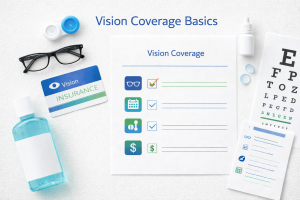
Medigap does not cover routine vision care, such as eye exams for glasses or eyeglasses, because Original Medicare does not. It does pay its share when Part B covers medical eye care, such as cataract surgery or treatment of eye disease.
➤ Which eye care does Medicare Part B cover?
Part B covers medically necessary eye care, including cataract surgery, glaucoma screening for people at high risk, a yearly diabetic eye exam for people with diabetes and treatment of certain eye diseases. Medigap pays its share of those costs.
➤ Will Medigap pay for my glasses?
No, not routine glasses. The exception is corrective lenses after cataract surgery with an intraocular lens, which Part B helps pay for, and your Medigap plan pays its share of that Part B cost. For routine glasses, use a vision plan, a discount program or pay a retailer directly.
➤ How much will I pay for cataract surgery with Plan G?
With Plan G, you pay the Part B deductible, $283 in 2026, and Plan G covers the remaining Part B coinsurance for Medicare-approved costs. Your exact costs depend on where the surgery is done and whether you met the deductible.
➤ Can I add vision coverage to Medigap?
You cannot add it to the Medigap policy itself, but you can buy a separate vision plan or vision discount program. Compare the premium with what you expect to spend on exams and glasses each year.
➤ Is a vision plan worth it with Medigap?
It depends on how often you need new glasses and the cost of your eyewear. Add the premium to any copays and compare that with paying cash at a retailer, which can sometimes cost less.
➤ Do Medicare Advantage plans cover vision?
Many Medicare Advantage plans may include routine eye exams and an eyewear allowance, depending on the plan and county. Not all plans offer vision, and Medicare Advantage cannot be combined with Medigap. If you keep Medigap, buy separate vision coverage or budget for routine eye care.
➤ Does Medigap cover vision care when I travel abroad?
Medigap Plans C, D, F, G, M and N cover 80% of emergency care abroad after a $250 deductible, up to $50,000 lifetime, which can include an eye emergency. Routine eye exams and glasses abroad are not covered, just as they are not covered at home.
➤ Does Medigap cover treatment for macular degeneration?
When Part B covers treatment for an eye disease such as macular degeneration, your Medigap plan pays its share of the Part B cost-sharing. Coverage depends on medical necessity, so confirm with your eye doctor.