Speak with a licensed insurance agent

1-855-398-0716

TTY user 711 Mon-Fri : 8am-9pm EST

Explaining Medicare Advantage Plans

Medicare Advantage Plans, also known as Medicare Part C, offer an alternative way to receive your Medicare benefits. These plans are provided by private insurance companies and include Part A and Part B coverage, along with extra benefits.

Some even include prescription drug coverage, similar to Part D. Understanding these plans is crucial to making informed decisions about your healthcare needs.

We’ll explain how Medicare Advantage works, its benefits, and what to consider when exploring your options.

Our goal is to help you feel confident and informed in selecting the best healthcare fit for your situation.

Key Highlights

  • Medicare Advantage plans, also known as Medicare Part C, offer varied benefits not found in traditional Medicare, like dental and vision coverage.
  • These plans are managed by private companies and require staying within a provider network for lowered costs and enhanced services.
  • Unlike Original Medicare, Medicare Advantage plans include network restrictions, potentially limiting doctor and hospital choices but often offering lower expenses.
  • Plans come with annual out-of-pocket maximums, providing some financial predictability compared to Original Medicare.
  • When choosing a plan, consider costs, coverage, network, and CMS ratings to match healthcare priorities and financial goals.

Compare plans and enroll online

What is Medicare Advantage?

Medicare Advantage, often known as Medicare Part C, is an alternative to the federal government’s Original Medicare. Offered by private insurance companies, these plans provide all the benefits of traditional Medicare, often with additional services.

They can include coverage for prescription drugs, routine dental, vision, and hearing services, which aren’t covered under Medicare Parts A and B.

Understanding the differences between Medicare Advantage plans and Original Medicare is important to make informed decisions about your healthcare needs.

Let’s dive deeper into how these plans work and what makes them distinct from Original Medicare.

Overview of Medicare Advantage Plans

Medicare Advantage plans, or Medicare Advantage plans, are a comprehensive way for beneficiaries to receive their Medicare benefits through private insurance companies.

These plans must cover everything Original Medicare covers, including hospital and medical services. However, they also often include extra benefits that can significantly enhance your healthcare experience.

For instance, some plans offer coverage for prescription drugs under what you might know as Medicare Part D, along with other services such as dental, vision, and hearing aids, which are not typically covered under traditional Medicare.

Advantage plans attract many older adults because they often come with additional resources and services that promote overall wellness.

You’re still part of the Medicare system, but under Medicare Advantage plans, private insurance companies have contracts with the federal government to manage your benefits.

They usually include network restrictions, which means your choices in doctors and hospitals may be limited to those within the plan’s network.

It’s vital to consider what a Medicare Advantage plan includes. The network coverage is one of the key factors.

If you frequently travel or split your time between different residences, you might want to consider whether the network is national or restricted to a local area.

Additionally, Medicare Advantage plans can include telehealth services, fitness programs, and even some home care services for chronic conditions.

All these extras and resources aim to cater to your diverse healthcare needs, with a strong focus on preventive care.

While Medicare Advantage presents an appealing bundle of services, it’s essential to read through the specifics and ensure the plan aligns with your healthcare priorities.

Since these plans operate through private insurance companies, how you pay for services can vary significantly from Original Medicare.

Medicare Advantage often includes set annual out-of-pocket limits, which can be a crucial benefit if you anticipate high medical costs.

Deciphering the differences between these plans and traditional Medicare is critical for making a confident selection.

What remains constant is that your Medicare Advantage plan should support your health goals, offering the necessary care while being mindful of your financial considerations.

By thoroughly understanding each plan’s network, benefits, and limitations, you can find an Advantage plan that’s tailored to your needs.

Differences Between Medicare and Medicare Advantage

When you’re comparing Medicare to Medicare Advantage, the differences can guide you to a choice that best fits your healthcare needs.

Original Medicare, managed by the federal government, primarily covers hospital insurance (Part A) and medical insurance (Part B). It does not include prescription drugs, which means beneficiaries usually have to purchase a separate Part D plan.

Medicare Advantage, on the other hand, bundles these coverages together and is offered through private health insurance plans paid by the federal government to assume your care.

Traditional Medicare offers broader access to healthcare providers, with almost all hospitals and doctors nationwide accepting it. Medicare Advantage, in contrast, usually limits enrollees to networks of providers within a certain area.

This can impact your choice of doctors and hospitals unless you opt for a plan with broader network coverage, like a Medicare Advantage PPO.

Additionally, Medicare Advantage often includes benefits that traditional Medicare simply doesn’t offer, such as routine vision and dental care, which can be very appealing to older adults seeking comprehensive health services.

Furthermore, cost structures differ.

With Original Medicare, you usually pay a portion of your medical services via deductibles and coinsurance, whereas Medicare Advantage may come with different copayments, coinsurance, and maximum out-of-pocket costs, which are intended to provide financial predictability.

Another bonus for Advantage plans is that many offer $0 premiums, although enrollees must usually continue to pay the Part B premium.

In seeking to meet beneficiaries’ varied needs, Medicare Advantage plans can introduce different levels of complexity. Some plans offer performance ratings from CMS, which speak to customer satisfaction and service quality.

Beneficiaries can leverage these ratings as a tool to gauge a plan’s reliability and the quality of healthcare services offered.

This complexity, however, means comparing plans carefully before enrolling, considering factors such as costs, coverage, and providers essential to your ongoing care needs.

Understanding these key differences helps you make a choice that aligns with your health priorities and financial situation.

Both Medicare Advantage and traditional Medicare come with their own sets of benefits and potential limitations, thus empowering you to select the path that best suits your individual situation.

Remember to enter your ZIP code on our site to compare Medicare options. You may also call for personalized help once our phone number is available.

How Medicare Advantage Plans Work

How Medicare Advantage Works

Medicare Advantage plans serve as an alternative to traditional Medicare, offering an integrated package of benefits. They combine Parts A and B of Medicare, often including additional services like prescription drugs, dental, and vision within one plan.

Managed by private insurance companies, these plans must provide the same level of care as Original Medicare but often come with extra features and resources.

Understanding how Medicare Advantage operates can help you make informed decisions about network access, costs, and care options tailored to meet your health needs and financial considerations.

Key Highlights

  • Understand that HMOs offer lower costs but limited provider choices within a network.
  • PPOs provide flexibility to choose providers but may incur higher costs.
  • HMO plans require a primary care doctor to coordinate healthcare.
  • PPO plans do not need referrals to see specialists, allowing easier access to care.
  • Choosing between HMO and PPO plans depends on personal healthcare needs and budget.

Introduction to Medicare Advantage Plans

Medicare Advantage plans, also known as Medicare Part C, offer seniors an alternative way to receive Medicare benefits. These plans are provided by private insurance companies and usually include Medicare Part A and Part B coverage, along with extra benefits. One of the appealing aspects of Medicare Advantage is its flexibility, letting plan members choose from varied options such as HMOs (Health Maintenance Organizations) and PPOs (Preferred Provider Organizations). Understanding these choices helps individuals select a care plan that suits their health care needs and budget. Let’s explore the HMO and PPO options to see how they differ.

Rich content results: Image

Educational infographic introducing Medicare Advantage Plans with icons for Original Medicare, Part C, Additional Benefits, Network Providers, and Cost Management. Set on a pastel blue background, featuring modern symbols like a hospital cross and stethoscope in a flat vector style.

Plan Type Provider Network Flexibility Cost Implications
HMO (Health Maintenance Organization) Restricted Network Requires Primary Care Physician (PCP) & Referrals Generally Lower Premiums
PPO (Preferred Provider Organization) Larger Network No Referrals Needed, More Freedom to Choose Providers Potential Higher Premiums

This table provides a concise comparison of accessing healthcare through traditional Medicare versus Medicare Advantage plans, emphasizing the impact of network structures and pricing agreements on care delivery and out-of-pocket costs.

How to Access Care with Medicare Advantage

Accessing care through Medicare Advantage plans involves a network of providers strategically chosen by the plan to give beneficiaries comprehensive care options.

These networks typically include hospitals, doctors, and other healthcare providers who’ve agreed to offer services at negotiated rates. Being mindful of the network restrictions is crucial for getting the most out of your plan without unexpected costs.

With Medicare Advantage, you typically pay lower fees when you use in-network providers since the plan has a financial agreement with them to provide services at discounted costs.

This can be a strong motivator for many enrollees to remain within the network for their healthcare needs.

For those familiar with traditional Medicare, this network concept may seem quite different.

Whereas traditional Medicare offers the flexibility to see virtually any doctor or visit any hospital that accepts Medicare, Medicare Advantage often limits you to a network of providers local to your area.

This can affect beneficiaries who travel often. For those who need care outside their immediate location or have specific provider preferences, understanding these network details is essential.

Medicare Advantage plans also often incorporate additional resources such as telehealth services, making it easier to consult with healthcare professionals from the comfort of your home.

Telehealth can be especially beneficial for beneficiaries with limited mobility or chronic conditions needing frequent consultation.

Additionally, some plans may offer transportation services to help you get to medical appointments, thereby addressing potential barriers to access.

One of the important aspects of accessing care is the understanding of how payment works within these networks.

When within the network, you can often expect to pay copayments as opposed to the 20% coinsurance that is standard with traditional Medicare.

This could mean more predictable healthcare costs, which is significant for budget-conscious seniors who want to avoid unexpected financial burdens.

Remember, though, that despite these benefits, you must still pay your Part B premium in addition to any premium your Medicare Advantage plan might have. Thus, evaluating these costs and services is vital for making the best choices for your healthcare needs.

Understanding Network Restrictions in Advantage Plans

Network restrictions are a defining feature of Medicare Advantage plans, directly affecting who you can see for care and where you can go for services.

It’s imperative for beneficiaries to understand these restrictions since they determine how accessible medical treatment options are.

These networks are comprised of selected providers who agree to specific pricing and quality standards set by the insurance companies offering the plans.

As a beneficiary, you’ll generally need to receive your care from these in-network providers to pay the lowest out-of-pocket costs.

If you’re considering a Preferred Provider Organization (PPO) type of Medicare Advantage plan, you’ll have a bit more flexibility. PPO plans allow you to see out-of-network providers, but typically at a higher cost.

This flexibility can be worthwhile for those who prioritize seeing specific doctors or specialists not included within the network.

However, it’s crucial to understand that even with PPO plans, using in-network care tends to be the most cost-effective approach, as the insurance company’s contracted rates apply, and you may benefit from lower co-payments.

Health Maintenance Organization (HMO) plans, another common type of Medicare Advantage plan, offer less flexibility than PPOs, since they require you to choose a primary care doctor from within their network.

Except for emergency and urgent care, you’ll need referrals to see specialists, and obtaining care outside the network could lead to higher costs or outright denial of coverage for those services.

Hence, examining the network’s reach and the availability of preferred doctors and medical facilities beforehand can significantly impact your experience with such plans.

For beneficiaries who manage chronic illnesses or require specialized care, ensuring that you’re selecting a plan with a network that supports these needs is paramount.

Having a well-established network means you can routinely access the necessary specialists and services, which is particularly beneficial for maintaining an ongoing treatment plan without interruptions or additional expenses.

Ultimately, when choosing Medicare Advantage, consider the network restrictions carefully.

The convenience and cost benefits of staying in-network can make these plans an attractive choice, provided you prioritize the right factors and you’re aware of any limitations involved.

This understanding empowers you to make informed decisions, ensuring that your healthcare needs are met comprehensively within the parameters set by your chosen plan.

Remember to enter your ZIP code on our site to compare Medicare options. You may also call for personalized help once our phone number is available.

Find & Compare Plans Online

Speak with a licensed insurance agent

1-855-398-0716TTY 711

Mon-Fri: 8am-9pm ET

Benefits of Medicare Advantage Plans

Medicare Advantage plans offer an integrated approach to healthcare, serving as an alternative to Original Medicare.

These plans, managed by private insurance companies, provide a variety of services that go beyond traditional Medicare coverage, often including prescription drug, dental, and vision benefits.

Medicare Advantage plans are structured to simplify your healthcare by combining services that would typically require separate policies.

Understanding the broad range of benefits available can help you determine if these plans meet your specific health and financial needs, ultimately supporting informed decisions for your healthcare journey.

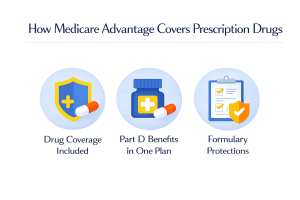
How Medicare Advantage Covers Prescription Drugs

Additional Services Covered by Medicare Advantage

When considering Medicare Advantage plans, one of the appealing aspects is the additional services they cover compared to Original Medicare.

These plans often extend their coverage to include prescription drugs, which is not the case with Medicare Parts A and B. This means you don’t have to take out a separate Part D policy, potentially saving time and streamlining your healthcare management.

Beyond prescriptions, many plans also offer coverage for dental care, vision check-ups, and hearing services, basics that help maintain your quality of life but are not covered by traditional Medicare.

These added benefits cater to diverse health needs that many older adults prioritize. For example, regular dental check-ups are crucial as you age, impacting overall health and well-being.

Similarly, vision care is not just about glasses or contact lenses but also about diagnosing potential eye conditions early. Hearing services can also be vital, as many seniors experience hearing loss, which, if untreated, can lead to social isolation.

Medicare Advantage plans recognize these needs by including them under their umbrella of coverage, which can provide a significant value-add over traditional Medicare.

Another compelling feature of these plans is the inclusion of wellness programs and gym memberships, such as SilverSneakers. Such incentives encourage physical activity and community engagement, essential components of staying healthy as you age.

Telehealth services are increasingly covered, too, allowing for virtual visits with healthcare providers. This is a convenient option for those with mobility challenges or chronic conditions requiring frequent consultation.

By integrating these services, Medicare Advantage promotes a holistic approach to health.

Alternative therapies, like acupuncture or chiropractic care, are occasionally included within Medicare Advantage offerings. While these aren’t standard in all plans, having the option appeals to those interested in non-traditional medical treatments.

It’s important to evaluate if these additional services align with your lifestyle and health goals.

The flexibility and comprehensive care options make Medicare Advantage a robust choice, potentially reducing out-of-pocket costs associated with accessing such services separately.

These plans focus on preventive care and wellness, aiming to make holistic healthcare more accessible and affordable.

Understanding the scope of what these plans offer equips you with the knowledge necessary to choose a plan aligning with your personal health priorities and expectations.

Comparing Medicare Advantage with Other Health Insurance

Comparing Medicare Advantage with other health insurance options, such as Original Medicare and private health insuranc,e can help illuminate the distinct benefits of enrolling in an Advantage plan.

Unlike Original Medicare, which tends to have higher out-of-pocket costs and requires separate policies like Part D for drug coverage, Medicare Advantage plans often offer all-in-one packages.

These plans streamline healthcare by combining Medicare Parts A and B with extra services like prescription drugs, making it easier to manage health benefits under a single policy.

One key point of comparison is how Medicare Advantage plans handle network restrictions.

While Original Medicare provides extensive flexibility in choosing healthcare providers, Medicare Advantage operates through networks of contracted providers, potentially limiting your choice.

However, these networks often mean lower out-of-pocket costs for enrollees; getting care within the network generally involves paying set copayments instead of coinsurance, leading to more predictable expenses.

Private insurance plans that aren’t tied to Medicare usually operate similarly in terms of network use and can have varied structures and benefits.

Financial predictability is a strong incentive for choosing Medicare Advantage. These plans typically include an annual out-of-pocket maximum, providing a safety net against high medical costs.

By contrast, Original Medicare does not cap out-of-pocket spending, which can lead to unpredictable healthcare expenses. In private insurance, out-of-pocket limits can vary greatly, often influenced by the policy’s premium level and network design.

Quality can also be a differentiating factor. Medicare Advantage plans are rated by the Centers for Medicare & Medicaid Services (CMS) based on service quality, offering a benchmark for potential enrollees to gauge a plan’s effectiveness.

These ratings can guide you in selecting a plan that not only fits your financial constraints but also promises satisfactory service quality. Private health insurance typically lacks such standardized public rating systems, making it harder to compare offerings directly.

In conclusion, understanding these aspects, coverage options, cost structures, network use, and quality ratings helps you weigh Medicare Advantage against other health insurance solutions.

This insight supports making informed decisions tailored to your healthcare and financial needs. Remember to systematically review your options, considering how each plan’s benefits align with your personal health priorities and budget constraints.

Remember to enter your ZIP code on our site to compare Medicare options. You may also call for personalized help once our phone number is available.

Cost Considerations in Medicare Advantage

When looking into Medicare Advantage plans, it’s important to understand the various costs involved. These plans, offered by private insurance companies, facilitate a structured payment approach that differs from Original Medicare.

With Medicare Advantage, there are specific costs like monthly premiums and out-of-pocket expenses to consider. Additionally, the networks associated with these plans may imply different financial calculations compared to traditional Medicare.

Being well-informed about these cost factors is crucial in choosing a plan that fits your health insurance needs while staying within your budget.

Monthly Costs for Medicare Advantage Plans

Monthly costs, often referred to as premiums, are a key part of understanding Medicare Advantage plans. When you enroll in these plans, which are run by private insurance companies, you may find a range of premium costs.

Some plans tout low or $0 premiums, but remember that you’ll still need to pay your Medicare Part B premium each month.

The premium structure can feel familiar if you’ve had private health insurance before, as it’s somewhat of a fixed payment that grants you access to your coverage.

What many seniors value about Medicare Advantage plans is the financial predictability offered, despite the regular monthly payments. The consistent premium helps in managing a fixed health insurance budget.

More affordable plans are available, yet it’s essential to examine whether a plan with no monthly premium meets all your healthcare needs.

This involves looking at the full scope of services included, such as prescription drugs, dental, vision, and other services that supplement Medicare coverage.

For those comparing costs, using resources like KFF (Kaiser Family Foundation) can provide helpful insights into the average premiums and the payment structures across different plans offered in your area.

These costs typically tie back to the services provided, the network of providers, and sometimes the plan’s financial performance and ratings.

High-quality plans might come with slightly higher premiums but may also offer better service coverage and customer satisfaction ratings.

It’s important to note that Medicare Advantage plans can be financially attractive due to the bundles they offer, which include Medicare Parts A and B, along with additional coverages that reduce the need for separate policies.

While ensuring affordability, these plans emphasize comprehensive health coverage by integrating numerous services under one policy.

Remember, when sorting through monthly premiums, evaluating the quality and scope of care within each plan is as crucial as the cost, supporting seniors in making knowledgeable and personalized decisions.

To further assist with navigating the decision-making process, consider the following key aspects of Medicare Advantage plans:

  • Evaluate network size and the plan’s access to preferred healthcare providers.
  • Investigate the plan’s inclusion of additional services like dental and vision.
  • Assess how prescription drugs are covered within the plan.
  • Review customer satisfaction ratings for insights on service quality.
  • Check compatibility with current healthcare needs and potential future needs.
  • Compare the out-of-pocket maximums across different plans.
  • Look for any additional perks, such as wellness programs or gym memberships.

By evaluating these factors, you can choose a Medicare Advantage plan that aligns with your health and financial needs.

Possible Out-of-Pocket Expenses in Advantage Plans

Beyond the monthly premiums, out-of-pocket expenses are another critical financial element within Medicare Advantage plans. These expenses might catch some beneficiaries by surprise if not fully anticipated.

Typical out-of-pocket expenses in Medicare Advantage plans can include copayments, coinsurance, and deductibles. A significant advantage over Original Medicare is the annual out-of-pocket maximum, which caps the annual costs a beneficiary might have to pay.

This cap brings a degree of financial safety, particularly useful if healthcare needs unexpectedly rise.

Understanding these expenses involves knowing the different services that might require out-of-pocket payments.

For instance, while in-network provider visits often result in predictable copayments, seeing out-of-network specialists might incur higher costs and sometimes additional approval from the insurance company.

Also, hospital stays and certain medical procedures could bring higher coinsurance costs, depending on the plan’s details and network agreements.

Beneficiaries interested in plans that include broader service categories, like dental or vision, should also be aware of how those services contribute to the overall cost structure.

Medicare Advantage plans sometimes have separate cost-sharing details for these additional services, which means homework is needed to understand fully how these impact the pocketbook.

Utilizing available resources, such as the annual “Evidence of Coverage” document provided by plans, helps clarify likely out-of-pocket costs for various services.

One should also consider plan networks and how they influence potential out-of-pocket costs. Plans with narrow networks might offer lower costs but could limit provider choices, potentially raising costs if out-of-network care is necessary.

Balancing premium affordability with potential fees incurred from using non-network services requires a thoughtful approach.

Sound advice for making these considerations is to review network lists and service areas, ensuring they align with preferred healthcare providers.

In conclusion, thoroughly evaluating both the potential costs and benefits of Medicare Advantage plans enables wiser decisions.

While plans vary in costs, by assessing out-of-pocket expenses with anticipated healthcare needs, seniors can find a plan that fits their financial and health objectives.

These insights aid in demystifying Medicare Advantage costs, fostering informed choices for better health management and fiscal prudence.

Enter your ZIP code on our site to compare Medicare options. You may also call for personalized help once our phone number is available.

How to choose a Medicare Advantage Plan

How to Choose a Medicare Advantage Plan

Choosing a Medicare Advantage plan that best suits your needs is a critical step in managing your healthcare effectively. Understanding the various factors involved can help you make informed decisions.

From private insurance networks to the intricacies of plan policies, several elements should be weighed carefully. Besides potential out-of-pocket costs, evaluating services, coverage quality, and the networks these plans rely on is crucial.

This section explores these considerations to guide you in choosing a Medicare Advantage plan aligned with your health priorities and financial goals.

Factors to Consider When Selecting Coverage

Selecting the right Medicare Advantage plan involves careful consideration of multiple factors that affect your coverage and financial well-being.

First, it’s important to understand that these plans are offered by private insurance companies and vary widely in terms of services, costs, and network restrictions.

When evaluating a plan, consider how it compares to your needs and how it fits with your Medicare goals. A detailed look at coverage elements, like included services and network flexibility, helps ensure the plan supports your healthcare priorities.

One of the primary factors in choosing a Medicare Advantage plan is the network of providers associated with it.

Unlike Original Medicare, which offers broad access to healthcare providers across the country, Medicare Advantage plans usually operate within specific networks.

These networks can be regional or national, impacting your choice of hospitals, doctors, and specialists. If staying with your current healthcare providers is important to you, check if they’re included in the plan’s network.

Additionally, consider how the plan’s network deals with out-of-state or out-of-area services. If you frequently travel, finding a plan that offers coverage both locally and nationally may be essential.

Another critical consideration is the cost structure of the plan. While some Medicare Advantage plans have low or no premiums, it’s vital to factor in other potential costs such as copayments, coinsurance, and deductibles.

Medicare Advantage plans often include an annual out-of-pocket maximum, which is a financial safety net. This cap can protect you from high medical expenses, adding predictability to your budget.

Compare these costs against your expected healthcare needs to find a plan that aligns with your financial situation without sacrificing necessary coverage.

The quality of the plan is also something to weigh. Medicare Advantage plans are rated by the Centers for Medicare & Medicaid Services (CMS) based on service quality.

Factors such as customer satisfaction, care management, and available resources affect these ratings. Higher ratings often equate to better managed care and can serve as a reliable indicator when selecting a plan.

Also, consider the additional services offered, such as dental, vision, and hearing care, which are typically not covered by Original Medicare.

Having these services included can add considerable value to your plan, especially if maintaining your quality of life as you age is a priority.

Lastly, when assessing a Medicare Advantage plan, it’s useful to explore additional resources such as educational tools and community programs.

Organizations like the Kaiser Family Foundation (KFF) offer resources that can help you compare different plans based on costs, coverage, and customer feedback.

By consulting these resources, you can gain a broader understanding of what’s available and what to expect from different plans.

Balancing these factors, network coverage, costs, quality ratings, and additional services, empowers you to choose a Medicare Advantage plan that meets your personal health and financial goals.

Remember to enter your ZIP code on our site to compare Medicare options. You may also call for personalized help once our phone number is available.

Understanding Medicare Advantage plans can help you make informed choices about your healthcare needs. Remember, you can enter your ZIP code on our website to explore different Medicare options available in your area.

Once our phone number is available, feel free to call for personalized assistance. We’re here to offer guidance and simplify the process of finding the right coverage for you or your loved ones.


Compare plans and enroll online

Frequently Asked Questions

What is a Medicare Advantage Plan?

A Medicare Advantage Plan, also known as Medicare Part C, is a type of health plan offered by private insurance companies that provides all Original Medicare benefits and often additional services, such as dental, vision, and hearing coverage.

How do Medicare Advantage Plans differ from Original Medicare?

Medicare Advantage Plans bundle Medicare Parts A and B and often include additional benefits like prescription drug coverage. Unlike Original Medicare, these plans may require you to use a network of doctors and hospitals.

What should I consider when choosing a Medicare Advantage Plan?

When choosing a Medicare Advantage Plan, consider the costs, benefits, network restrictions, and CMS quality ratings. Ensure the plan fits your healthcare needs and budget.

Are there network restrictions with Medicare Advantage Plans?

Yes, Medicare Advantage Plans often have network restrictions, meaning you may need to use specific doctors and hospitals to get the lowest costs.

Can Medicare Advantage Plans offer additional services?

Yes, Medicare Advantage Plans can offer additional services like prescription drugs, dental, vision, and hearing coverage, which Original Medicare typically does not include.

Have Questions?

Speak with a licensed insurance agent

1-855-398-0716

TTY users 711

Mon-Fri: 8am-9pm ET

Find & Compare Plans Online

Speak with a licensed insurance agent

1-855-398-0716TTY 711

Mon-Fri: 8am-9pm ET

ZRN Health & Financial Services, LLC, a Texas limited liability company