





Speak with a licensed insurance agent

1-855-398-0716

TTY user 711 Mon-Fri : 8am-9pm EST

Medicare Advantage Plans 2027

Medicare Advantage plans continue to grow in popularity among seniors looking for coverage that combines hospital, medical, and often prescription benefits in a single policy.

As Medicare rules evolve, Medicare Advantage plans for 2027 are expected to offer updated features that support preventive care, chronic condition management, affordability, and access to supplemental benefits such as dental, vision, and hearing services.

Many seniors appreciate the convenience of having one Medicare plan instead of managing multiple policies. Others choose Medicare Advantage because of the added benefits not included in Original Medicare.

Understanding how Medicare Advantage plans may look in 2027, how coverage is expected to change, and how to compare options can help you select a plan that fits your needs.

Medicare Advantage plans 2027 are offered by private insurers approved by Medicare. While each plan must provide Part A and Part B benefits, insurers can design additional features, provider networks, cost-sharing structures, and wellness programs.

This variety allows seniors to choose the type of plan that suits their healthcare preferences and budget.

how to compare and enroll in Medicare advantage plans in 2027

What Medicare Advantage Plans Provide in 2027

Medicare Advantage plans for 2027 are expected to provide the same foundational coverage as today’s plans, with updates designed to improve the overall quality of health care delivered through each health plan.

These plans must follow Medicare rules under the federal program, ensuring that Medicare Part A and Part B benefits remain consistent while insurers design additional features that support seniors.

Insurers continue to focus on preventive care, making many screenings and annual checkups available with low or zero cost. Preventive services help seniors stay aware of changes that affect long-term health and can help detect conditions early.

Home-based care options and virtual visits remain important. Many plans offer nurse support lines, remote care monitoring for chronic conditions, and virtual access to doctors for urgent or routine concerns.

Convenience plays an important role for older adults who want to manage their health with fewer in-person visits.

Prescription drug coverage within Medicare Advantage continues to include tiered formularies, preferred pharmacy savings, and support for medication therapy management for eligible members.

Formularies may evolve in 2027 to support lower-cost generic options and easier access to commonly used medications.

For seniors who want a single Medicare plan that includes a wide range of benefits, Medicare Advantage remains a practical option.

See plans available in your area

Differences Between Medicare Advantage and Original Medicare

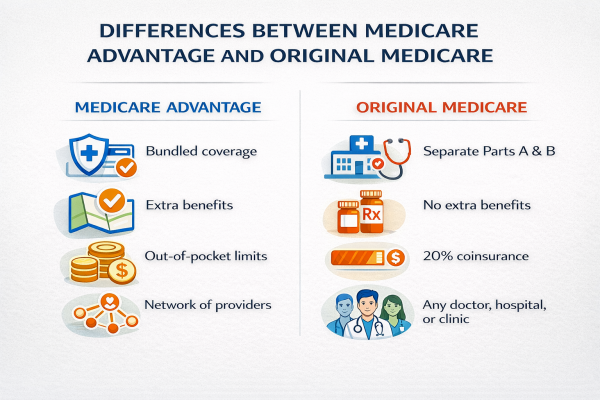
Original Medicare provides nationwide access to providers who accept Medicare, but it continues to leave Medicare beneficiaries responsible for out-of-pocket costs unless they add supplemental coverage.

Seniors who choose Original Medicare often add a Part D plan for prescriptions and may purchase a Medigap policy to help cover deductibles and coinsurance.

Medicare Advantage plans offer a different experience. These plans combine medical and hospital coverage, and many also include prescription drug benefits.

They include an annual limit on out-of-pocket expenses for Medicare-approved services, giving seniors stronger protection against unexpected medical bills.

Provider network rules are another major difference. Original Medicare allows members to visit any provider that accepts Medicare. Medicare Advantage plans use networks such as HMOs and PPOs.

HMOs typically require members to use in-network providers, while PPOs allow some out-of-network visits at higher costs.

Seniors who want added benefits such as dental and vision services often consider Medicare Advantage. Those who want full provider freedom without network rules often choose Original Medicare with Medigap.

Understanding your coverage needs, travel habits, and medical history helps determine which model fits your lifestyle.

Understanding Medicare Advantage and Home Health Care

Medicare Advantage Trends for 2027

As Medicare rules evolve, insurers design updated benefits in response to proposed regulatory adjustments and performance goals that help maintain the quality of care for members.

Many insurers are expanding supplemental benefits such as dental allowances, eyewear support, hearing aid benefits, and fitness memberships. These services are popular among seniors and help reduce routine healthcare costs.

Plans are also focusing on expanded behavioral health access. Virtual mental health visits, counseling support, and coordination between behavioral health and primary care continue to grow.

Another trend involves stronger support for chronic condition management. Data tools, remote monitoring devices, and home-based care options help seniors manage ongoing conditions more effectively.

Plans may also include nutrition support, chronic care teams, and transportation benefits for medical appointments.

Prescription drug benefits continue to evolve alongside federal rules. Insurers may adjust formularies to encourage the use of lower-cost generics and biosimilars.

Some plans may offer improved cost-sharing during the early phases of Part D coverage, helping seniors access medications more affordably.

Medicare Advantage plans in 2027 are also expected to expand virtual care services, making it easier for seniors to connect with specialists, primary care providers, and care managers without leaving home.

Best Medicare Advantage Plan Types Available in 2027

Seniors choosing Medicare Advantage in 2027 will find several types of health plans available depending on their ZIP code and the insurer’s network.

HMO plans typically require members to use in-network doctors and hospitals. They often have lower premiums and predictable copays for common services. Members usually select a primary care provider who coordinates referrals and helps manage care.

PPO plans offer more flexibility by allowing out-of-network visits, usually at a higher cost. These plans appeal to seniors who want the option to see providers outside the network.

Private Fee-for-Service plans remain available in some regions and allow members to see any Medicare-approved provider willing to accept the plan’s terms. Coverage details vary widely, so seniors should review plan specifics before joining.

Special Needs Plans serve seniors with certain conditions or circumstances.

These include Chronic Condition SNPs for conditions such as diabetes or heart failure, Institutional SNPs for those in long-term care settings, and Dual Eligible SNPs for members who qualify for both Medicare and Medicaid.

Each type of plan has different network rules, coverage structures, and benefits. Seniors should compare plan types by reviewing provider access, cost-sharing, and how each model supports their healthcare priorities.

Different Medicare advantage plan types

Medicare Advantage Costs and What to Expect in 2027

While premiums for Medicare Advantage plans can vary widely depending on the insurer and location, many plans continue to offer low or zero dollar premiums.

That does not mean they are free, but instead that insurers structure costs through copays, coinsurance, and out-of-pocket limits instead of monthly premiums.

Important cost factors for 2027 include:

  • Monthly premiums for the plan
  • Copays for doctor visits, specialists, hospital stays, and urgent care
  • Prescription drug copays based on formulary tiers
  • Dental and vision allowances
  • Out-of-pocket maximums that cap your total yearly spending

Medicare Advantage plans must include an annual out-of-pocket limit, which provides protection during serious medical events. Once seniors reach this limit, covered Medicare services cost nothing for the rest of the year.

Some plans may charge higher copays for out-of-network services or require prior authorization before certain treatments or tests. Seniors should review these details to ensure the plan they choose matches their expectations for access and costs.

Comparing two or three Medicare Advantage plans side by side helps seniors understand how each plan distributes costs and which structure best supports their healthcare usage.

Insurers structure premiums, copays, and cost-sharing based in part on the Medicare plan payments they receive for each member, which influence how benefits and pricing appear in the plan.

Supplemental Benefits Included with Medicare Advantage in 2027

Medicare Advantage plans often include supplemental benefits that go beyond Medicare Part A and Part B. These benefits support seniors by providing coverage that helps reduce the cost of everyday healthcare needs and improve quality of life.

Supplemental benefits expected in 2027 include:

  • Dental benefits such as cleanings, exams, X-rays, and dental allowances
  • Vision services, including eye exams and eyewear support
  • Hearing tests and options for hearing aids
  • Transportation for medical visits
  • Fitness memberships or wellness programs
  • Nutrition support and counseling
  • Telehealth services for both physical and behavioral health

These supplemental benefits help seniors reduce everyday health care costs and support long-term wellness goals. While not every plan includes the same benefits, many insurers continue to expand offerings to meet member expectations.

Seniors should review the summary of benefits for each plan to confirm what is included. Plans may set coverage limits, annual maximums, or service restrictions. Reviewing these details helps ensure the plan meets your healthcare needs.

Medicare advantage plan options and benefits

Prescription Drug Coverage and Formularies in 2027

Many Medicare Advantage plans in 2027 include integrated prescription drug coverage. Because formularies operate under Medicare’s Part D program, plans may adjust drug tiers or preferred pharmacy arrangements from one year to the next.

Formularies list the medications a plan covers and place them into tiers that determine copay amounts. Lower-cost generics usually have the lowest copays, while brand-name drugs and specialty medications may cost more.

Plans may offer preferred pharmacy networks that provide lower costs for prescriptions. Online tools and mail-order pharmacies continue to be important features for seniors who take maintenance medications.

Because formularies can change every year, seniors should review their medication list during the Annual Enrollment Period to confirm continued coverage.

Seniors with chronic conditions or expensive medications can also benefit from speaking with a Medicare specialist who can compare drug costs across multiple Medicare Advantage plans.

Part D rules continue to evolve, and 2027 formularies may include adjustments designed to support more affordable generic and biosimilar options.

Factors to Consider When Comparing Medicare Advantage Plans

Comparing Medicare Advantage plans involves reviewing benefits, provider access, costs, and how each plan supports your healthcare priorities.

Seniors should begin by listing their doctors and confirming whether those providers participate in the networks of the plans they are considering.

Medication needs are another major factor. Seniors should compare their prescription list with each plan’s formulary to see how drugs are covered and whether preferred pharmacies offer lower prices.

Next, review supplemental benefits such as dental, vision, hearing, fitness, transportation, and wellness resources. These benefits differ widely between insurers and can influence the overall value of the plan.

Costs are also important. Look at the premiums, copays, coinsurance, and out-of-pocket maximums for each plan. A plan with a slightly higher premium may ultimately be more affordable if it offers lower copays for the services you use most.

Seniors should also consider travel habits. Some plans offer broader access for members who spend part of the year in another state, while others are designed for members who stay within a specific region.

If comparing plans feels overwhelming, a licensed Medicare specialist can help by reviewing your doctors, medications, and budget to identify plans that align with your needs.

Seniors should also review star ratings when comparing health plans, since these scores offer insight into customer experience, preventive care performance, and how well the insurer supports members with ongoing conditions.

Find a plan to fit your needs and budget

How to Enroll in a Medicare Advantage Health Plans for 2027

To enroll in a Medicare Advantage plan for 2027, seniors must have Medicare Part A and Part B and live in the plan’s service area. Enrollment is available during specific Medicare enrollment periods.

The Initial Enrollment Period occurs when you first become eligible for Medicare, starting three months before turning 65 and ending three months afterward.

The Annual Enrollment Period runs each year from October 15 through December 7 and allows seniors to join, switch, or leave Medicare Advantage plans.

The Medicare Advantage Open Enrollment Period takes place from January 1 through March 31 and allows members already enrolled in Medicare Advantage to switch plans or return to Original Medicare.

Some seniors may qualify for Special Enrollment Periods due to life changes such as moving, losing employer coverage, or changes in plan availability.

Preparing for enrollment includes gathering your medications, preferred doctors, and budget information. Reviewing these details with a licensed Medicare advisor can help you select a plan that supports your medical needs and financial goals.

If you want support choosing a Medicare Advantage plan for 2027, you can contact a Medicare Plans Guide specialist for a personalized consultation.

A licensed advisor can help you compare plans in your ZIP code, review benefits and costs, and select coverage that fits your needs with confidence.

Medicare Advantage Plans 2027

What are Medicare Advantage plans for 2027?

Medicare Advantage plans, also called Part C, are offered by private insurance companies that contract with Medicare.

For 2027, these plans must cover all services included under Original Medicare (Part A and Part B) and often include
additional benefits such as vision, dental, hearing, or wellness programs. Coverage details, costs, and provider
networks can vary by plan and location.


When can I enroll in or change a Medicare Advantage plan for 2027?

The primary time to enroll in or change a Medicare Advantage plan for 2027 is the Annual Enrollment Period (AEP),
which runs from October 15 through December 7.

Changes made during this period typically take effect January 1, 2027. Other enrollment periods may apply if you experience certain qualifying life events.


Do Medicare Advantage plans include prescription drug coverage in 2027?

Many Medicare Advantage plans include prescription drug coverage (often referred to as MAPD plans), but not all do.

Drug coverage varies by plan, including which medications are covered, how drugs are tiered, and which pharmacies are
in-network. It’s important to review the plan’s formulary to understand potential costs and coverage rules for 2027.


Can doctors and hospitals change in Medicare Advantage plans from year to year?

Yes. Provider networks can change annually, meaning doctors or hospitals you use today may not participate in the
same plan for 2027. Reviewing the plan’s provider directory and any network updates helps ensure your preferred
providers are still covered before the new year begins.


How should I compare Medicare Advantage plans for 2027?

When comparing plans, look beyond the monthly premium and review total expected out-of-pocket costs, provider
network access, prescription drug coverage, and extra benefits. Comparing plans side by side based on your personal
healthcare needs can help you better understand which options may fit your situation in 2027.

Have Questions?

Speak with a licensed insurance agent

1-855-398-0716

TTY users 711

Mon-Fri: 8am-9pm ET

Find & Compare Plans Online

Speak with a licensed insurance agent

1-855-398-0716TTY 711

Mon-Fri: 8am-9pm ET

ZRN Health & Financial Services, LLC, a Texas limited liability company