Speak with a licensed insurance agent

1-855-398-0716

TTY user 711 Mon-Fri : 8am-9pm EST

Medicare Part D

Understanding Medicare Part D is important for managing your prescription drug costs. This type of Medicare coverage helps pay for medications prescribed by your doctor.

It can be added to Original Medicare, some Medicare Cost Plans, or Medicare Medical Savings Account Plans. With so many details to consider, it’s helpful to know how Part D works, what it covers, and the benefits it provides.

Our guide will break down everything you need to know in simple, clear terms to help you make informed decisions. Let’s explore how Medicare Part D can support your healthcare needs.

Key Highlights

  • Medicare Part D helps cover prescription drug costs for enrollees, offering standalone and bundled plans.
  • Drug plans have formularies with varying costs; understanding tiers aids in managing expenses.
  • Plan costs depend on factors like premiums, deductibles, income, and government assistance.
  • Enrolling in Part D timely manner helps avoid penalties; special periods offer extra opportunities.
  • Resources like Medicare Plan Finder and SHIP counselors assist in selecting suitable plans.

Compare plans and enroll online

What is Medicare Part D?

Medicare Part D is a program that offers prescription drug coverage to individuals enrolled in Medicare. It’s specifically designed to help cover the costs of your medications through a Medicare drug plan.

Part D isn’t automatically included with Medicare; instead, you need to sign up for it either through a standalone Part D plan or a Medicare Advantage plan that includes drug coverage.

The main benefits of enrolling in Medicare Part D include reducing out-of-pocket costs and ensuring access to necessary prescription drugs.

To qualify for Part D, you must first be enrolled in Medicare Part A and/or Part B. Once eligible, you’ll choose a drug plan that suits your needs and budget.

It’s important to note that each plan offers different types of drug coverage, formularies (lists of covered medications), and costs. Understanding these variations can help you find the appropriate plan.

Medicare Part D drug coverage is a crucial part of managing healthcare expenses, ensuring you have access to medications. As you explore your Medicare options, consider how Part D can fit into your overall healthcare plan.

What is Medicare Part D

Understanding Drug Coverage Options

Diving into Medicare’s prescription drug coverage can feel overwhelming, but it’s important for managing healthcare costs.

Medicare Part D provides drug coverage to support those enrolled in Medicare, offering financial relief for prescription medication expenses.

This program is designed to help seniors and caregivers choose from multiple drug plans tailored to fit different needs and budgets.

As you weigh your options, consider how these plans work and the resources available to support your decision-making process, ensuring you select a drug coverage plan that best complements your healthcare strategy.

How Drug Plans Work

Medicare Part D helps cover prescription drugs by offering both standalone plans and those bundled within Medicare Advantage plans. A separate prescription drug plan is available to Medicare enrollees not enrolled in a Medicare Advantage plan with drug coverage.

Each plan features a list of covered medications, known as a formulary, and varies in costs and benefits. These drug plans are part of a government program aiming to provide financial support for prescription medications.

By understanding how these plans operate, including cost-sharing elements such as premiums, deductibles, and copayments, seniors can better manage their drug expenses.

To select an appropriate drug plan, it’s vital to review the specific drugs each plan covers and at what tier. The formulary is key, as drugs are typically placed in tiers that determine your share of the cost.

Additionally, drug plans have networks of pharmacies that influence where you can fill your prescriptions and the costs involved.

Resources are available to help you navigate these options, including online tools for comparing plans, consulting with licensed experts, and utilizing Medicare’s official resources.

Medicare enrollees should assess their recurring medication needs and financial situation. Also, pay attention to any additional support programs that may reduce costs further.

With careful consideration and the wealth of resources provided through MedicarePlansResource.org, managing your prescription drug coverage under Medicare Part D becomes a more straightforward process.

How Much Does Medicare Part D Cost?

Understanding the costs associated with Medicare Part D can help you better manage your medication expenses. The price you’ll pay for Medicare Part D can vary based on several factors, such as plan selection and income.

It’s important to know these costs upfront to plan your budget effectively. Financial resources and assistance from the program can help alleviate some expenses.

As you delve into how much Medicare Part D costs, learning about the elements influencing these costs and the available government support can ensure you’re making informed coverage decisions.

Factors Affecting Your Costs

The cost of Medicare Part D includes various factors, each influencing your overall expenses. Primarily, the type of drug plan you apply for plays a significant role in determining costs.

Connecting with the right plan can make a considerable difference in your financial commitments. Government programs offer several plans with varying premiums and monthly fees to keep your coverage active.

These premiums can fluctuate based on the benefits each plan offers and your geographical location.

In addition to premiums, there are additional costs like deductibles, which are set amounts you pay out-of-pocket before your drug coverage begins.

After meeting the deductible, you’ll encounter copayments or coinsurance; these are the amounts you pay for prescriptions after reaching the deductible. Many plans categorize drugs into tiers, each with different copayment levels, affecting your costs.

Your income level also impacts what you might pay. Some people qualify for the Extra Help program from the government, offering financial assistance to those who need it.

The extra help can significantly lower premiums and other out-of-pocket costs, making prescription drugs more affordable. Evaluating these factors will guide your decision, helping you choose an option that best fits your healthcare needs and budget.

Find & Compare Plans Online

Speak with a licensed insurance agent

1-855-398-0716TTY 711

Mon-Fri: 8am-9pm ET

Enrolling in Medicare Part D

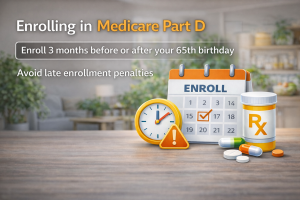
Enrolling in Medicare Part D is an essential step to accessing prescription drug coverage for those on Medicare. This program offers vital financial support, helping to reduce the cost of medications.

To apply, you’ll need to qualify for Medicare Part A or Part B. The enrollment process can be straightforward with the right resources and assistance.

It’s crucial to consider your medication needs and budget when selecting a plan. Understanding this aspect of Medicare can ensure you have the coverage you need while avoiding potential penalties that come with late enrollment.


Enrollment Process Important Deadlines Avoiding Penalties Resource Utilization Plan Selection
Review eligibility criteria and gather necessary documentation Initial enrollment period: 3 months before to 3 months after turning 65 Enroll on time to avoid late enrollment penalties Utilize online tools for plan comparison Consider personal medication needs when evaluating plan options
Apply online, by phone, or in person Annual Open Enrollment: October 15 – December 7 Ensure continuous coverage to prevent gaps Seek assistance from Medicare counselors for complex queries Review plan formularies and pharmacy availability
Receive confirmation and understand benefits Special Enrollment Periods for certain life events Document communication for dispute resolution Access educational materials provided by Medicare.gov Evaluate costs beyond premiums, including deductibles and co-pays

This table encapsulates the strategic approach to enrolling in Medicare Part D, emphasizing the importance of timely and informed decision-making.

Enrolling in Medicare Part D

Avoiding the Enrollment Penalty

One key consideration when enrolling in Medicare Part D is avoiding the dreaded enrollment penalty. This penalty can kick in if you fail to apply for a drug plan during your initial enrollment period and remain without creditable drug coverage.

Avoiding this penalty requires understanding your enrollment timeline and recognizing when you qualify for a special enrollment period.

Carefully reviewing your healthcare needs and drug requirements before your initial enrollment can help you select the right plan at the right time.

This not only helps mitigate immediate financial burdens but also prevents long-term costs associated with penalties.

For those new to Medicare, it usually means applying for Medicare Part D when you first become eligible. However, changes in your current drug coverage can also open a special enrollment window.

Always check your current coverage to see if it’s considered creditable by Medicare. If not, you may want to join a Part D plan to avoid the penalty.

MedicarePlansResource.org offers valuable resources and support to guide you through this process. They provide insights into government programs and assist in comparing drug plans that meet your financial and healthcare requirements.

The key to avoiding the enrollment penalty is timely action and informed choices. With a clear understanding of Medicare’s timelines and the resources available, enrolling doesn’t have to be daunting.

Empower yourself with knowledge and support to make these critical healthcare decisions confidently.

If you’re uncertain, don’t hesitate to reach out to experts who can provide guidance tailored to your specific situation, ensuring you meet all Medicare requirements while securing the drug coverage you need.

Transitioning to actionable ways to avoid incurring these penalties, consider the following smart strategies:

  • Enroll during your Initial Enrollment Period to sidestep future penalties.
  • Verify your current prescription coverage is considered “creditable” by Medicare standards.
  • Inform yourself annually of any changes to Medicare rules and updates impacting enrollment.
  • Consider Special Enrollment Periods if you experience qualifying life events.
  • Seek professional guidance to understand the ins and outs of available Medicare plans.
  • Regularly review your plan to ensure any prescription changes remain covered.
  • Educate relatives about these strategies to assist them with their preparations.

Applying these measures ensures compliance, keeping penalties at bay while securing your necessary medication coverage.

Using Your Prescription Drug Coverage

Making the most of your prescription drug coverage is crucial for managing your medication expenses under Medicare Part D. Understanding how to use this coverage effectively can help maximize your benefits and minimize costs.

One key aspect involves finding participating pharmacies that align with your drug plan. These pharmacies play a vital role in accessing your medications at the negotiated rates set by your plan.

It’s essential to understand the resources available through your drug plan, the government program, and other support avenues, which can assist in navigating this process.

Finding Participating Pharmacies

Finding participating pharmacies in your Medicare Part D plan’s network is essential for effectively using your prescription drug coverage.

These pharmacies partner with your drug plan to provide medications at the negotiated rates you’ve agreed upon when you enroll. You’ll want to start by looking at your drug plan’s formulary and the pharmacy network provided by your insurance plan.

This process can be supported by various resources, such as your plan’s website, government tools like the Medicare Plan Finder, and customer service hotlines that explain which pharmacies are included in your plan’s network.

Pharmacies within the network have agreed to the pricing terms of your plan, which usually means lower out-of-pocket costs than if you use non-network pharmacies. This is highly beneficial from a financial perspective.

You might find additional perks offered by some pharmacies, such as home delivery or personalized support, services that can add convenience and value to your drug plan benefits.

Using these resources effectively depends on understanding the scope of the program and how to apply it to your benefit.

By exploring your options and leveraging available resources, you can find pharmacies that not only fit within your financial framework but also enhance your overall healthcare strategy.

Remember to check for any extra support programs that may assist with costs, and don’t hesitate to engage with your plan’s customer service for personalized guidance.

Gaining a clear understanding of your network’s pharmacies allows you to make informed decisions, ensuring full and efficient use of your Medicare Part D prescription drug coverage.

Getting Help with Part D Plans

Getting Help with Part D Plans

Navigating Medicare Part D prescription drug coverage can be a complex task, but there are many resources designed to help seniors find the right plan for their needs.

Understanding how to get help with Part D plans includes recognizing the programs and support available. These services can offer guidance in selecting, applying, and enrolling in a plan that ensures adequate drug coverage.

Whether you need financial assistance or information on government resources, knowing where to turn for help can empower you to make confident healthcare decisions.

Resourceful Tips for Seniors

Understanding your options when it comes to Medicare Part D is crucial, especially with so much information available. To start, check if you qualify for any government programs or extra assistance.

The “Extra Help” program, for instance, can significantly reduce your out-of-pocket costs for prescription medications. Seniors who qualify might find their expenses for premiums, deductibles, and copayments significantly reduced.

It’s a good idea to contact your local Social Security office or use online resources to assess eligibility for this vital assistance.

Aside from financial help, using available resources can streamline your Part D plan selection process. The Medicare Plan Finder is a powerful tool on gov websites where you can compare different plans’ benefits and costs.

This allows you to see which options offer the best drug coverage for your particular situation. Consider reaching out to a SHIP (State Health Insurance Assistance Program) counselor for personalized advice.

These professionals provide unbiased information about Medicare plans and can support you in assessing your healthcare needs and the corresponding coverage options.

Enrolling in Medicare Part D doesn’t have to be overwhelming when armed with the right knowledge. Use all the resources at your disposal, including support systems designed specifically to simplify Medicare for seniors.

It’s important to stay informed and proactive, ensuring that you’re making well-considered choices that align with both your budget and medical requirements.

Remember, getting help with Part D plans can ensure you have access to necessary medications without the stress and confusion often associated with healthcare.

By leveraging support, you’ll be better equipped to navigate the landscape of Medicare prescription drug coverage with confidence.

Understanding Medicare Part D helps you manage your prescription drug costs effectively. Remember that plans can vary in terms of coverage, formularies, and costs.

For a deeper dive into available options, enter your ZIP code on our site to explore Medicare plans near you. If needed, you can also call for personalized assistance when our phone service is available.

We’re here to support you in making informed and confident decisions about your Medicare coverage.


Compare plans and enroll online

Frequently Asked Questions

What is Medicare Part D?

Medicare Part D is a program that provides prescription drug coverage to individuals enrolled in Medicare. It’s designed to help cover medication costs, and you can sign up for it through standalone Part D plans or Medicare Advantage plans with drug coverage.

How can I enroll in Medicare Part D?

To enroll in Medicare Part D, you must be eligible for Medicare Part A and/or Part B. It’s important to enroll during your initial eligibility period to avoid late enrollment penalties. Special enrollment periods might also provide opportunities if you miss the initial period.

What are the costs associated with Medicare Part D?

The costs of Medicare Part D include premiums, deductibles, copayments, and coinsurance. These costs vary based on the plan, your income, and whether you qualify for programs like the “Extra Help” initiative.

What is a formulary, and how does it affect my drug coverage?

A formulary is a list of medications covered by a Medicare Part D plan. Drugs are categorized into tiers that affect your payment share, with each tier having different cost levels. Understanding the formulary can help manage your medication expenses.

How can I find the right Medicare Part D plan for my needs?

To find a suitable Medicare Part D plan, assess your medication requirements and compare different plans through resources like the Medicare Plan Finder. Consulting with SHIP counselors can also provide personalized, unbiased advice tailored to your healthcare needs.

Have Questions?

Speak with a licensed insurance agent

1-855-398-0716

TTY users 711

Mon-Fri: 8am-9pm ET

Find & Compare Plans Online

Speak with a licensed insurance agent

1-855-398-0716TTY 711

Mon-Fri: 8am-9pm ET

ZRN Health & Financial Services, LLC, a Texas limited liability company