Speak with a licensed insurance agent

1-855-398-0716

TTY user 711 Mon-Fri : 8am-9pm EST

What is the Difference Between Medigap Plan G and N?

Medigap Plan G and Plan N are two popular choices for seniors looking to enhance their Medicare coverage. While both plans help cover gaps left by Original Medicare, they have key differences. Understanding these differences is important to make informed decisions about your healthcare needs.

Plan G offers broader coverage, including excess charges, while Plan N may involve lower premiums but includes some copayments. By exploring these options, you can better determine which plan aligns with your budget and health needs. Let’s dive into the specifics of Plan G vs. Plan N to guide your Medicare journey.

Key Highlights

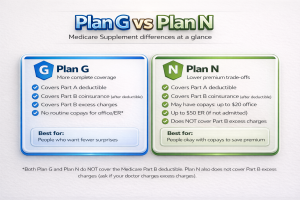
  • Medigap Plan G offers comprehensive coverage, handling almost all out-of-pocket expenses except the Medicare Part B deductible.
  • Plan N provides lower premiums with copayments and doesn’t cover Part B excess charges or certain office visit costs.
  • Plan G is ideal for those needing frequent medical care and valuing broad coverage without cost surprises.
  • Plan N suits budget-conscious seniors comfortable with occasional copayments and lower premiums.
  • Entering your ZIP code on our site helps you compare Medigap options and find suitable coverage for your needs.

Compare plans and enroll online

Understanding Medicare and Medigap Plans

Navigating Medicare can be a journey filled with many paths, especially when it comes to supplement insurance like Medigap. Original Medicare, which includes Part A and Part B, covers a lot, but there are still gaps that leave room for extra costs. This is where Medigap, or Medicare Supplement Insurance, steps in.

Medigap plans, including popular ones like Plan G and Plan N, help cover out-of-pocket costs like deductibles and coinsurance. Understanding these plans is crucial to making informed decisions about your healthcare and keeping those out-of-pocket costs manageable.

What is Medicare?

Medicare is a federal health insurance program primarily designed for people aged 65 and older, though it also covers some younger individuals with disabilities or specific health conditions. It comprises different parts that serve various purposes, Original Medicare includes Part A and Part B. Part A is hospital insurance covering inpatient hospital stays, care in a skilled nursing facility, hospice care, and some home health care.

On the other hand, Part B provides medical insurance for outpatient care, doctor visits, and preventive services like flu shots and screenings. It’s an essential part of the healthcare landscape for seniors, offering basic coverage but often accompanied by out-of-pocket costs, which is why some seek additional coverage through Medigap plans.

While Original Medicare covers a broad spectrum of services, it doesn’t cover everything. For instance, services like routine dental or vision care, hearing aids, and long-term care are not included, potentially leading to significant expenses. This is where Medicare Advantage (Part C) or Medicare Supplement plans like Medigap can offer more comprehensive coverage.

Medicare Advantage plans provide an alternative, managed care approach, often with extra benefits, whereas Medigap policies supplement your Original Medicare by filling coverage gaps. Exploring these options helps ensure you aren’t caught off-guard by unexpected healthcare costs during your retirement. Plus, understanding Medicare’s role and limitations empowers you to choose the supplement or advantage plan that aligns best with your health needs and financial situation.

Consider exploring key strategies when navigating Medicare options to enhance your health coverage during retirement effectively:

  • Review Medicare Advantage plans for potential extra benefits like dental and vision care.
  • Investigate Medigap policies to cover out-of-pocket expenses Original Medicare doesn’t.
  • Compare plan costs and benefits annually, as they can change.
  • Check if your preferred doctors and hospitals are within a Medicare Advantage plan’s network.
  • Assess your current and future health care needs before selecting a plan.
  • Understand enrollment periods to avoid penalties and ensure continuous coverage.
  • Seek professional advice if Medicare terms or options seem overwhelming.

These insights provide a foundation for making informed Medicare choices.

How Does Medigap Fit Into Medicare?

Medigap plans, or Medicare Supplement Insurance, are private insurance policies that complement Original Medicare by covering extra healthcare costs, such as copayments, coinsurance, and deductibles. These plans are standardized and labeled as Plans A through N in most states, each offering a different set of benefits tailored to address specific healthcare needs.

For instance, Medigap Plan G is one of the most comprehensive, covering almost all out-of-pocket expenses not paid by Medicare except for the Part B deductible. Meanwhile, Plan N offers a balance of coverage with cost-saving potential, requiring some copayments for doctor visits.

A key benefit of having a Medigap plan is the freedom it gives in choosing healthcare providers. Unlike Medicare Advantage plans with network restrictions, a Medigap policy lets you see any doctor that accepts Medicare, nationwide. It offers predictable healthcare costs, which is particularly advantageous during fixed-income retirement.

Additionally, Medigap plans protect against unforeseen medical expenses, providing peace of mind and financial security. During the enrollment period, typically at age 65 when you first start your Part B coverage, you’re guaranteed the right to buy a Medigap plan without health questionnaires, so it’s crucial to act then if you’re considering supplement coverage.

Choosing between Medigap Plan G and Plan N depends on various factors, including budget, health needs, and how much risk you’re comfortable taking with out-of-pocket expenses. Each plan has its unique set of benefits and cost structures, so understanding their differences helps tailor your Medicare experience to better fit your future healthcare expectations and financial considerations.

To ease decision-making, continue exploring the specifics of each plan and see how they align with your lifestyle and potential medical needs. To explore Medicare options and find the right plan for your needs, remember to enter your ZIP code on our site. We’re here to help make your Medicare journey as smooth as possible.

Medigap plans

What is Medigap Plan G?

Medigap Plan G is a Medicare Supplement plan, cherished for its extensive coverage, bridging many gaps left by Original Medicare. It serves as a reliable companion to Parts A and B by handling nearly all out-of-pocket expenses, save for the Medicare Part B deductible. This plan ensures stability, offering predictable healthcare costs.

While it generally involves higher monthly premiums, the coverage under Plan G can significantly lessen financial burdens related to medical services. Benefiting those seeking comprehensive care, it’s a sound choice for individuals desiring broad coverage without surprises in expenses.

Coverage Details of Plan G

Medigap Plan G covers all out-of-pocket costs except the Medicare Part B deductible, making it one of the most comprehensive Medicare Supplement plans available. You’ll find that, apart from this deductible, Plan G covers excess charges, which can arise if your healthcare provider charges more than the Medicare-approved amount for services.

This ensures that you’re not caught off-guard by unexpected costs from a hospital or doctor’s visit. Plan G covers important services such as hospital coinsurance, skilled nursing facility care, and emergency health coverage during foreign travel. It’s comforting to know that all of these additional expenses are taken care of even when Original Medicare falls short.

Plan G generally has higher monthly premiums compared to other Medigap plans, but for many, the peace of mind it provides in exchange for out-of-pocket predictability is worth the cost. It’s ideal for those who frequent the doctor’s office, as it minimizes financial variances in medical expenses.

In instances where Medicare Part B excess charges might be an issue, Plan G covers these fully, saving potentially hundreds annually. For anyone weighing their options, understanding how Plan G ensures medical costs don’t unexpectedly impact your budget contributes significantly to informed decision-making for Medicare supplements.

Who Benefits Most from Plan G?

Seniors who seek comprehensive coverage but are comfortable with paying slightly higher premiums might find Plan G particularly appealing. This plan benefits individuals who wish to avoid dealing with surprise charges and prefer predictable healthcare expenses.

It’s a fitting choice for those who need frequent medical care or anticipate needing hospital stays and require the broadest coverage from a Medicare Supplement plan. Plan G is also well-suited for those living in areas where providers may charge more than the Medicare-approved rates, as it covers these excess charges entirely.

Additionally, Plan G empowers those who value unfettered choice in healthcare providers. Unlike Medicare Advantage plans, which may restrict you to a network, Plan G allows you to visit any doctor or hospital that accepts Medicare. This flexibility is particularly advantageous for snowbirds or those who travel often, as it ensures continuity in care across different states.

Even for those contemplating the stability of predictable healthcare costs against potentially rising rates, Plan G offers a comprehensive package that mitigates unexpected charges while maintaining access to healthcare nationwide. Ultimately, those who prioritize extensive coverage with little hassle over their healthcare costs will likely find Plan G a beneficial match.

What is Medigap Plan N?

Medigap Plan N is a Medicare Supplement plan designed to fill some of the gaps left by Original Medicare. Like other Medigap plans, it helps cover costs such as deductibles and coinsurance, making healthcare more affordable for seniors.

However, Plan N structures your costs differently compared to other Medigap plans like Plan G. It’s crafted for those who prefer lower monthly premiums with the trade-off of paying some copayments and potentially excess charges. By exploring what Medigap Plan N offers, seniors can determine if it aligns with their medical and financial needs.

Coverage Details of Plan N

If you’re considering a Medigap policy, Plan N might be appealing due to its balance of affordable premiums and substantial coverage. Plan N covers the Part A coinsurance and hospital costs up to an additional 365 days after Medicare benefits are exhausted, which is reassuring for unexpected extended hospital stays. It also includes hospice care coinsurance and copayments, as well as the first three pints of blood every year, providing essential support for those critical times when you need medical attention.

Plan N doesn’t cover the Part B deductible, similar to Plan G. You’ll need to pay a copayment of up to $20 for some office visits and up to $50 for emergency visits that don’t result in inpatient hospital admission. Though these copays exist, the overall savings from the lower monthly premiums can be significant.

Plan N doesn’t cover the Part B excess charges. Thus, if you visit a provider who charges above the Medicare-approved amount, you’ll be responsible for the difference. Many find these potential charges manageable, especially when providers in your area accept the Medicare assignment.

For those who rarely see specialists or require extensive medical services, Plan N presents a budget-friendly option with substantial coverage. Medigap Plan N also covers skilled nursing facility care coinsurance, providing peace of mind for seniors who might need ongoing assistance after hospital stays.

While it doesn’t include foreign travel emergency coverage, considering additional travel policies could round out your coverage plan. By weighing these coverage details, seniors can decide if Plan N meets their healthcare needs while fitting their budget.

Who Benefits Most from Plan N?

Seniors who prefer a lower monthly premium with predictable costs for doctor visits and emergency care may find Medigap Plan N an ideal choice. It’s particularly beneficial for those who don’t mind small out-of-pocket payments when visiting the doctor, as these instances are manageable within their budget.

Plan N is suitable for individuals with infrequent medical appointments, leading to substantial savings compared to higher premium plans. Additionally, those who live in areas where most providers accept Medicare assignment won’t have to worry about excess charges, making this plan an attractive option.

Seniors considering Plan N should also be comfortable with some variation in their medical expenses due to the possibility of copayments. However, for many, the savings on their premiums more than make up for these occasional costs.

Choosing Plan N is typically advantageous for those without significant ongoing medical issues, allowing them to benefit from low premiums while ensuring critical coverage needs are met. It’s a plan well-suited for retirees on a fixed income who want to maintain financial predictability while optimizing their healthcare expenditure.

Ultimately, Medigap Plan N is ideal for those who enjoy a careful balance of cost and coverage. It’s particularly suited for healthy seniors looking for essential insurance against unexpected hospital expenses without paying higher monthly premiums.

This plan helps control Medicare Supplement insurance costs while maintaining the freedom to visit any doctor or hospital accepting Medicare, making it a solid option for many budgeting-conscious retirees. By understanding who benefits most from Plan N, seniors can decide if it aligns with their healthcare goals and financial situation.

Find & Compare Plans Online

Speak with a licensed insurance agent

1-855-398-0716TTY 711

Mon-Fri: 8am-9pm ET

Comparing Plan G and Plan N

Understanding the differences between Medigap Plan G and Plan N can truly impact how effectively your healthcare needs are met. Both plans serve as valuable supplements to Original Medicare, helping cover those pesky out-of-pocket costs that can pop up unexpectedly.

If you’ve been exploring their options, Plan G and Plan N offer distinct benefits and cost structures that suit different needs. Delving into the finer details of coverage, excess charges, and how rates may increase will aid in pinpointing which plan aligns best with your lifestyle and budget. Let’s dive into what sets them apart.


Aspect Plan G Plan N
Monthly Premium Typically higher than Plan N Generally lower than Plan G
Doctor Visit Copayments No copayments Copayments are required ($20 per office visit)
Emergency Room Copayments No copayments Copayments are required ($50, waived if admitted)
Coverage of Part B Excess Charges Covered Not covered
Hospitalization Coverage Same coverage as Plan N Same coverage as Plan G

This table highlights how Medigap Plan G and Plan N differ in coverage and cost-sharing, providing a clear overview to guide your Medicare Supplement decisions regarding these plans.

Differences in Coverage

When comparing Medigap Plan G and Plan N, it’s crucial to understand how their benefits and coverage differ. Both plans help pay for out-of-pocket costs not covered by Original Medicare, but there are notable distinctions. Plan G stands out for its comprehensive nature, covering virtually all expenses except the Medicare Part B deductible.

This level of coverage ensures that, beyond your premiums and the Part B deductible, your medical costs remain predictable and manageable. For many, this predictability offers peace of mind, especially when dealing with frequent doctor visits or medical procedures.

On the other hand, Plan N typically comes with lower monthly premiums, making it an attractive option for those who prefer initial savings. While Plan N also covers Part A coinsurance and other essential benefits, it introduces some cost-sharing aspects.

Beneficiaries may encounter copayments of up to $20 for certain office visits and around $50 for emergency room visits that don’t result in an inpatient admission. However, Plan N does not cover Part B excess charges, meaning if providers charge above the Medicare-approved amount, you might need to pay the difference.

It’s important to consider your typical healthcare needs carefully. If you see specialists or have frequent medical appointments, Plan G might offer more financial predictability.

Meanwhile, Plan N could be more appealing for those healthy seniors who don’t visit the doctor often, as the savings on premiums might compensate for the occasional copayment. Understanding these coverage nuances allows you to tailor your Medicare Supplement insurance to best suit your health profile and financial plans.

Understanding Excess Charges with Plan N

One aspect of Medigap Plan N that often needs further clarification is how it handles excess charges. Excess charges can arise when a healthcare provider bills more than what Medicare agrees to pay, a situation that Plan G covers entirely but Plan N does not. This coverage variance can make a big difference in your out-of-pocket costs, particularly if you receive services from providers who don’t accept Medicare assignment.

For many considering Plan N, it’s wise to look into how providers in your area typically bill. If most accept Medicare assignment, you may rarely encounter excess charges, thereby making Plan N a viable, cost-saving option. However, in locales where higher billing rates are common, those potential excess costs can add up quickly, impacting the budget you had envisioned for healthcare expenses.

Balancing these potential costs against the lower premiums of Plan N is key. Seniors who don’t mind some unpredictability with excess charges but prioritize saving on their monthly premiums often find Plan N matches their financial and healthcare expectations.

It’s also a strategic option for those who predominantly see providers under Medicare assignment. Enhancing your understanding of these excess charges with Plan N ensures you are well-prepared to make informed decisions that align with your budgeting goals. For anyone deciding between Medigap Plan G and Plan N, weighing these factors can help refine your choice.

By understanding how excess charges could influence out-of-pocket spending, alongside how each plan eases different aspects of healthcare costs, you’re better equipped to pick a plan that coincides with both your health circumstances and financial comfort level. Remember that understanding these nuances isn’t just about immediate costs, but about strategically managing your healthcare finances over the long term.

To continue your journey in exploring Medicare options and make the best choice, enter your ZIP code on our site to compare available plans. Our resources and guides are here to support you on this path.

Making an Informed Choice

Choosing between Medigap Plan G and Plan N involves considering various factors to find the best fit for your healthcare needs and budget. Both plans are excellent options for supplementing Original Medicare, but they differ in coverage and costs.

We’ll look at the crucial factors to consider, including the benefits, potential costs, and how each plan fits into your lifestyle. Making an informed choice requires understanding plan details, your healthcare habits, and financial preferences to ensure you select a plan that offers the right balance of coverage and costs.

Factors to Consider When Choosing a Plan

When deciding on Medigap Plan G or Plan N, it’s essential to weigh several factors that influence your choice. These factors can affect both your immediate costs and long-term healthcare expenses, so let’s look at how to evaluate them effectively. Consider your healthcare usage, such as how frequently you visit doctors and whether you require regular medical services.

If you have frequent appointments or require consistent care, Plan G might be preferable for its comprehensive coverage, minimizing unexpected out-of-pocket costs. Plan G also covers excess charges from healthcare providers, ensuring minimal financial surprises.

In contrast, Plan N may appeal more if you prefer lower premiums and are comfortable with occasional copayments and potential excess charges. Plan N does not cover these excess charges if your provider bills above the Medicare-approved amount, which can vary depending on where you live and your choice of provider.

Check if most providers in your area accept Medicare’s assignment to avoid unforeseen expenses. If you’re on a budget and don’t mind paying small fees during some doctor visits, Plan N might be a more suitable choice.

It’s also wise to factor in how these plans align with your long-term financial strategy. Consider the enrollment period and when is best to apply for a Medigap policy to avoid underwriting.

During the initial enrollment period, right after you first enroll in Medicare Part B, you have greater freedom to choose any Medigap plan without medical underwriting, thus avoiding potential rate increases due to health conditions later. This timing can be essential in locking in a suitable plan at a favorable rate.

Understanding the plan benefits, rates, and differences between the plans helps ensure the coverage aligns with your expectations. Weighing these considerations carefully can make the choice between Plan G and Plan N more straightforward, allowing you to focus on broader health and financial goals.

Remember, choosing the right medigap plan isn’t solely about immediate costs, but about setting the groundwork for stable, predictable healthcare expenses over time. Our guide and resources on MedicarePlansGuide.org can further simplify the decision-making process, ensuring you’re financially prepared for any health eventualities.

Deciding on medigap plan G or plan N

Next Steps in Selecting a Medigap Plan

Once you’ve weighed the differences between Medigap Plan G and Plan N, the next step is to carefully consider your specific health needs, budget, and preferences. Beginning with the coverage offered, contemplate how each Medigap policy aligns with your healthcare usage.

If you frequently visit doctors or require regular medical services, Plan G’s comprehensive nature might provide greater peace of mind by covering most out-of-pocket expenses, save for the Part B deductible. Conversely, if you’re comfortable with cost-sharing in the form of copayments and prefer lower premiums, Plan N could be a more viable option.

Evaluating your current health status and anticipating potential future medical needs is crucial. Consider whether the benefits each plan offers, such as deductible coverage, will accommodate your personal circumstances.

It’s also wise to review how each plan handles coinsurance and any possible rate increases that could impact your long-term affordability. Remember that a medigap plan not only supplements Original Medicare but also empowers you to choose any healthcare provider that accepts Medicare, enhancing your flexibility and control over your healthcare decisions.

Take into account the enrollment period as well. The best time to purchase a Medigap policy is during the initial six-month enrollment period starting when you first enroll in Medicare Part B. During this period, you can buy any plan without facing medical underwriting, meaning your health status won’t affect your rate.

Missing this window might result in higher rates or even denial of coverage based on pre-existing conditions. Carefully comparing the plan benefits, coverage, and rates helps ensure you’re selecting a plan that matches both your healthcare needs and financial expectations.

Finally, remember that making an informed choice extends beyond immediate savings, it’s about ensuring stable, predictable healthcare costs in retirement. To explore Medicare options further, remember to enter your ZIP code on our site.

We’re here to guide you by offering detailed insights into available plans and services. Our educational resources are designed to empower you in making confident, well-informed decisions about your health insurance coverage.

After reviewing both Medigap Plan G and Plan N, you may feel ready to compare your options further. Remember, it’s important to match a plan to your personal healthcare needs and budget. Use our site to enter your ZIP code and explore Medigap choices in your area.

We’re here to help simplify decisions and ensure you’re informed about your Medicare options. You can also call us for personalized guidance when our phone service is available. Empower yourself with clear, supportive information and the confidence to choose what’s right for you.


Compare plans and enroll online

Frequently Asked Questions

What is Medigap Plan G?

Medigap Plan G is a Medicare Supplement plan that covers most out-of-pocket expenses, including coinsurance and excess charges, except for the Medicare Part B deductible. It is ideal for those wanting broad coverage and predictable costs.

What makes Medigap Plan N different from Plan G?

Medigap Plan N offers lower premiums with some copayments and doesn’t cover Part B excess charges. It appeals to budget-conscious individuals who are comfortable with these additional costs.

Who should consider Medigap Plan G?

Seniors who need frequent medical care and prefer broader, more predictable coverage may find Plan G a fitting choice, as it covers virtually all out-of-pocket expenses save for the Part B deductible.

What is the advantage of choosing Medigap Plan N?

Medigap Plan N offers lower monthly premiums, making it attractive for those who visit doctors less frequently and are okay with occasional copayments and potential Part B excess charges.

How can I choose between Medigap Plan G and Plan N?

Consider your medical needs, budget, and comfort with out-of-pocket costs. Plan G offers comprehensive coverage, while Plan N comes with lower premiums but involves some cost-sharing. Enter your ZIP code on our site to compare options.

Have Questions?

Speak with a licensed insurance agent

1-855-398-0716

TTY users 711

Mon-Fri: 8am-9pm ET

Find & Compare Plans Online

Speak with a licensed insurance agent

1-855-398-0716TTY 711

Mon-Fri: 8am-9pm ET

ZRN Health & Financial Services, LLC, a Texas limited liability company