Medicare Part D is an important part of your Medicare coverage that helps pay for prescription drugs. Understanding what it covers ensures you have the necessary medications at manageable costs. This guide breaks down how Part D works, what drugs are typically included, and how it can fit into your overall Medicare plan. Whether you’re already enrolled or just exploring your options, this information can help you make informed decisions about your prescription drug coverage needs. Let’s take a clear, simple look at how Part D supports your healthcare journey.


Compare Medicare Plans
Compare plans and costs in your area






What Medicare Part D Covers
Key Highlights
- Medicare Part D covers the costs of prescription drugs, focusing on both generic and brand-name drugs.
- Eligibility for Part D requires enrollment in Medicare Part A or Part B.
- Different Part D plans have unique formularies; crucial to check if necessary medications are covered.
- Available resources like Extra Help assist with drug costs for low-income beneficiaries.
- Enrollment periods are vital to avoid penalties; plan choice should balance needs and budget.
Compare plans and enroll online
Understanding Medicare Part D
Medicare Part D is designed to help seniors manage the costs of prescription drugs. Understanding what Medicare drug coverage entails can ensure you make the most out of your medical choices. This section explores the essence of Medicare Part D, the eligibility criteria, and the links to other Medicare parts like Medicare Advantage and Medigap. With clarity and simple guidance, we’ll help unravel this aspect of Medicare to aid in your informed decision-making. Let’s dive into what Part D offers and who can benefit from this vital resource.

What is Medicare Part D?
Medicare Part D, also known as Medicare prescription drug coverage, offers seniors a way to manage and potentially lower their medication costs. This part is not included in Original Medicare, so it’s an additional plan you choose to enroll in if you need drug coverage. Private insurance companies approved by the government administer Part D plans. Each plan varies in terms of the medications it covers, meaning it’s essential to compare different ones based on your medication needs and budget.
Unlike Medicare Advantage plans, which provide additional health benefits in a more bundled format, Part D focuses solely on medications, allowing for a concentration on minimizing out-of-pocket expenses on drugs. These plans cover both generic and brand-name medications, although the list of covered drugs can differ, so understanding your medicines and their tiers in various plans is critical. Tiers refer to the differing levels of co-pays depending on the drug’s brand value, generic status, or specialty classification.
If you’re considering a Part D plan, examining the formulary, the list of covered medications, is a good starting point to ensure your essential medicines are covered. Having Part D could be a financial relief, particularly with ongoing prescriptions for chronic conditions. Exploring these distinct plans can help provide tailored coverage that aligns with your healthcare needs.
| Aspect | Details | Relevance |
|---|---|---|
| Coverage Specifics | Medicare Part D covers prescription drugs, including brand-name and generic medications, which are categorized into different tiers affecting copayments. | Ensures beneficiaries have access to necessary medications, reducing out-of-pocket expenses and promoting adherence to prescribed therapies. |
| Eligibility Criteria | Available to anyone eligible for Medicare Part A or enrolled in Part B. Specific yearly enrollment periods apply. | Understanding eligibility helps beneficiaries access the coverage they need, preventing delays or missed opportunities for enrollment. |
| Enrollment Information | Initial enrollment occurs during a 7-month period around one’s 65th birthday. Special Enrollment Periods may be available due to qualifying events. | Timely enrollment is crucial to avoid late enrollment penalties, ensuring continuous coverage. |
| Plan Comparison Considerations | Factors include monthly premiums, formulary lists, pharmacy networks, and out-of-pocket costs, varying widely among plans. | Careful comparison aids in selecting a cost-effective plan that meets individual health needs and budget constraints. |
This table highlights how Medicare Part D fits into the broader Medicare landscape, aiding in informed decision-making regarding prescription drug coverage.
Who is Eligible for Part D?
Eligibility for Medicare Part D hinges on your existing Medicare status. If you’re already enrolled in either Medicare Part A or Part B, you’re qualified to apply for a Medicare Part D plan. It’s also possible to get prescription drug coverage through a Medicare Advantage plan that includes drug benefits. This flexibility allows you to either enroll specifically in a stand-alone Part D plan or select a Medicare Advantage plan that bundles medical and drug coverage.
Enrollment periods are crucial when it comes to signing up for Medicare Part D. The Initial Enrollment Period lasts seven months, beginning three months before the month you turn 65, including the month itself, and ending three months afterward. Failing to enroll during this period or when first eligible might lead to a late enrollment penalty unless you qualify for an exception. Always consider future healthcare needs and costs while deciding on plan enrollment to avoid unnecessary penalties.
Medicare drug plans are particularly valuable if you have ongoing prescriptions or anticipate the need for costly medications. Therefore, understanding your eligibility not only ensures that you remain covered but might also offer peace of mind regarding your health and financial planning. Don’t forget to compare Part D and Medicare Advantage options to discern which offers the coverage scope aligning with your medical and lifestyle necessities.
What Medicare Part D Covers
Medicare Part D is an important part of healthcare for many seniors, focusing on covering prescription drugs. These plans help manage the costs of medications that would otherwise be out-of-pocket expenses. From generic medications to specialty drugs, understanding what Medicare drug coverage offers can ensure you select the right plan for your health needs. This section will delve into the basics of prescription drug coverage, exploring how these plans work and additional options available to enhance your Medicare coverage.
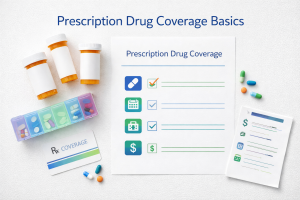
Prescription Drug Coverage Basics
Understanding the basics of Medicare Part D can make managing your prescription drug costs simpler. These plans are designed specifically to cover outpatient prescription drugs, helping to alleviate the financial burden of medications for Medicare beneficiaries. Each Medicare drug plan comes with its own unique formulary, which is the list of drugs covered under that specific plan. It’s important to review these formularies closely to ensure your current medications, whether generic or brand name, are included.
The coverage provided by Medicare Part D varies, often structured into different tiers. These tiers impact the cost-sharing elements associated with each prescription drug, influencing the copayments or coinsurance amounts based on whether the medication is deemed generic, preferred brand-name, or a specialty drug. It’s crucial to understand where your prescriptions fall within these tiers, as this will guide you in forecasting potential costs.
Medicare Part D plans also include a network of pharmacies, and choosing one within the network is typically more cost-effective. By opting for a network pharmacy, you not only save money but also adhere to plan conditions that could affect overall out-of-pocket expenses. Additionally, these plans cover various periods, including the Initial Coverage Limit and the catastrophic coverage phase, which provides substantial financial relief once out-of-pocket expenses reach a certain threshold. These components work together to provide comprehensive drug coverage designed to minimize the impact of medication expenses on your budget.
Additional Drug Coverage Options
Medicare provides additional avenues to enhance your prescription drug coverage beyond standard Part D plans. If you’re considering more extensive health coverage, Medicare Advantage plans might be an option, as many of these plans include drug benefits. These comprehensive plans combine Medicare Part A, Part B, and usually Part D, offering an all-in-one solution that can simplify your healthcare management.
Beyond Medicare Advantage, seniors can also explore Extra Help, a program that assists with Medicare drug plan costs. This can provide low-income beneficiaries with help in covering premiums, deductibles, and prescription copayments, easing the financial strain associated with essential medications.
Another avenue is reviewing State Pharmaceutical Assistance Programs (SPAPs), which are available in certain areas and offer another layer of financial support. These programs are tailored to assist in coordinating with Medicare drug coverage, further decreasing out-of-pocket costs for seniors. With various resources available, it’s beneficial to explore all options, ensuring your Medicare enrollment fully supports your health and drug coverage requirements. By understanding these additional drug coverage options, you can create a cost-effective strategy that not only addresses current medication needs but is also adaptable to future health changes.
Remember, while exploring these options, it’s essential to compare the benefits and costs each plan offers. This comprehensive approach will empower you to make informed decisions regarding your Medicare coverage. To discover plans available in your region, simply enter your ZIP code on our site, or call for personalized assistance once our phone number is available.
Find & Compare Plans Online
How Drug Plans Work
In understanding Medicare Part D, knowing how drug plans operate is key. Drug plans, or Part D plans, are crucial for managing prescription drug costs. Offered by private insurers, these plans help cover both brand-name and generic prescription drugs. Each plan has a unique formulary, or list of covered drugs, and features like preferred pharmacy networks that provide additional savings. By exploring the structure and benefits of various drug plans, you can better grasp how they help manage and reduce your prescription drug expenses.
Understanding Drug Costs with Part D
Medicare Part D is designed to help cover the costs of prescription drugs, which can be overwhelming without the right plan. Each plan has a formulary that lists covered drugs, with drugs organized into different tiers affecting cost. Typically, generic drugs are on lower tiers with lower copays, while brand-name and specialty drugs are on higher tiers, raising costs. Understanding these tiers is fundamental to managing your drug expenses effectively.
The cost of drugs under Medicare Part D includes several stages: initial deductible, initial coverage, coverage gap, and catastrophic coverage. Initially, you might pay full price until reaching the deductible. During the initial coverage phase, you’ll pay only a portion of the costs. Then comes the coverage gap phase, often called the “donut hole,” where costs might increase moderately. Yet don’t worry, catastrophic coverage kicks in once your out-of-pocket spending hits a certain threshold, significantly reducing costs.
Moreover, drug plan expenses aren’t limited to medications alone. Monthly plan premiums and potential late enrollment penalties can impact overall costs. Comparing plans not only by drug coverage but also by total costs ensures a budget-friendly choice. Using network pharmacies within your Medicare Part D plan can further bring down expenses, making prescription drugs more affordable.
Choosing the Right Drug Plan
Finding the right Medicare drug plan means looking beyond just the drug list or formulary. A suitable drug plan should mesh with your specific health needs and financial situation. Start by listing your regular medications and checking if they are covered in a plan’s formulary. Investigate the estimated out-of-pocket costs for these medications. Plans with low premiums might seem appealing, but pay attention to other cost details, like deductibles and coinsurance, which all impact your budget.
It’s also vital to consider the plan’s pharmacy network. Many Medicare Part D plans offer more savings if you use in-network pharmacies. The convenience of your pharmacy’s location and the mail-order options available can also sway your choice. Also, consider the plan’s customer service reputation and the ease of managing prescriptions through online portals or apps.
Don’t overlook special programs like Extra Help, designed to assist those with limited incomes in covering drug costs. This program can significantly lower premiums, deductibles, and copayments. Understanding these aspects aids in finding a drug plan that not only supports your health but also aligns comfortably with your financial needs. To see which plans are available to you, enter your ZIP code on our site or call for personalized assistance when our phone number is provided.
Practical Tips for Evaluating Medicare Drug Plans Effectively:
- Check the plan’s formulary to ensure your medications are covered.
- Analyze out-of-pocket costs, including deductibles and coinsurance, beyond monthly premiums.
- Consider the convenience and savings offered by the pharmacy network.
- Evaluate the plan’s customer service and digital management options.
- Explore financial assistance programs like Extra Help if eligible.
- Compare multiple plans using resources like ZIP code search tools.
- Seek personalized advice, but consider your specific healthcare needs first.
These steps should guide you in selecting a Medicare drug plan suited to both your health and financial situation.
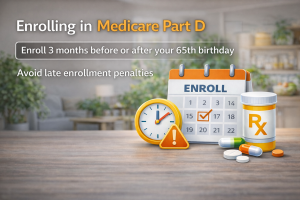
How to Enroll in Medicare Part D
Enrolling in Medicare Part D is a crucial step in securing prescription drug coverage to manage health expenses effectively. Medicare Part D plans, provided by private insurers, offer various drug coverage options tailored to meet diverse needs. Knowing how to enroll in Medicare Part D ensures uninterrupted access to necessary medications while avoiding potential penalties. This guide simplifies the enrollment process, emphasizing important timelines and government resources to help you make well-informed decisions. Let’s explore how to navigate your Part D enrollment smoothly, from open enrollment periods to utilizing pharmacies in your network.
Step-by-Step Enrollment Guidance
Beginning the enrollment process for Medicare Part D involves a few key steps designed to fit your health needs and ensure you receive valuable support. First, review your eligibility requirements for Medicare Part D enrollment. Typically, if you’re qualified for Medicare Part A or enrolled in Part B, you can apply for a Part D plan. Take advantage of the Initial Enrollment Period, a seven-month window that starts three months before the month you turn 65 and ends three months after. Missing this window may lead to a late enrollment penalty unless you qualify for certain exceptions.
Next, consider which prescription drugs you currently take and use this list to compare formularies of different Medicare Part D plans. Each formulary is a collection of the drugs that plans cover. Be sure to choose a plan that includes your medications, as different plans include drugs based on tiers that affect copay and coinsurance levels. This is vital in controlling your out-of-pocket costs, especially for health management over the long term. During this process, government resources, like Medicare.gov, can aid in comparing plans and costs associated with your choices.
After narrowing down your options, ensure to enroll during the Medicare open enrollment period in the fall, running from October 15 to December 7. This period allows you to join or change Medicare Advantage and Part D plans. Using government resources for accurate information, like the Medicare.gov site, can facilitate this step. It’s also wise to leverage support from available resources, such as community centers or your local pharmacy, if you need extra help navigating plan details or completing enrollment accurately.
Finally, once enrolled, pay attention to plan communications and yearly plan reviews. Plans can change formularies, premiums, and network pharmacies, impacting your costs and care access. Staying informed ensures ongoing suitability and helps mitigate any surprises in your drug coverage throughout the year. By following these steps and utilizing reliable resources, you can enroll in Medicare Part D confidently and optimize your health coverage.
Finding the Right Medicare Part D Plan
Finding the right Medicare Part D plan can seem overwhelming, but breaking it down step by step makes the process smoother. Start by reviewing your current medications and healthcare needs. This will help you assess which Medicare Part D plan options work best for you. Each plan’s formulary, or list of covered drugs, varies, so it’s essential to check if your prescription medications are included. Also, investigate how each plan organizes these drugs into cost tiers, as this impacts what you’ll pay out of pocket.
Consider the costs beyond the premiums. Although a plan may have a low monthly premium, it’s vital to look at deductibles and co-pays, as these factors can significantly affect your overall budget. Medicare Part D plans often also have preferred pharmacy networks. Choosing a plan that includes your preferred pharmacy or offers convenient mail-order options can save you money and time. Understanding these network benefits can lead to greater savings and make managing prescriptions easier.
Explore available assistance programs like Extra Help, which can aid in reducing the cost of your Medicare plan, especially for those with limited income. This program can offer substantial savings on premiums and medications, easing the financial burden associated with healthcare. By evaluating these aspects diligently, you’re better equipped to choose a Medicare Part D plan that balances your health needs with your budget requirements. To compare available plans in your area, input your ZIP code on our site, and when available, call us for personalized assistance.
We hope this guide has helped you understand what Medicare Part D covers. To find drug plans that meet your needs, enter your ZIP code on our site to compare your options today. For personalized help, our team will be ready to assist you with any questions. Stay informed and confident as you explore your Medicare choices. Thank you for visiting MedicarePlansGuide.org!
Compare plans and enroll online
Frequently Asked Questions
What types of medications does Medicare Part D cover?
Medicare Part D covers outpatient prescription medications that are approved by the plan and listed on its formulary. Coverage varies by plan and may differ based on drug type and classification.
Does Part D cover brand-name and generic drugs?
Most Part D plans cover both brand-name and generic medications, though costs may differ. Generic drugs are often placed on lower tiers with lower cost-sharing requirements.
Are all prescriptions automatically covered under Part D?
No, not all medications are covered. Each plan maintains its own formulary, and certain drugs may be excluded or subject to restrictions such as prior authorization or step therapy.
Does Medicare Part D cover specialty medications?
Some Part D plans cover specialty medications, but these drugs are often placed on higher tiers and may involve higher out-of-pocket costs. Coverage rules and pharmacy requirements can vary.
How can I verify if a medication is covered?
You can review the plan’s formulary, contact the plan directly, or use comparison tools to confirm whether a specific medication is covered and what cost-sharing applies.
Have Questions?
Speak with a licensed insurance agent
1-855-398-0716
TTY users 711
Mon-Fri: 8am-9pm ET
Find & Compare Plans Online
ZRN Health & Financial Services, LLC, a Texas limited liability company

Russell Noga is the CEO of ZRN Health & Financial Services, and head content editor of several Medicare insurance online publications. He has over 18 years of experience as a licensed Medicare insurance broker helping Medicare beneficiaries learn about Medicare, Medicare Advantage Plans, Medigap insurance, and Medicare Part D prescription drug plans.